Circle
Impact of Global Trade Relations on International Development
Circle: Impact of Global Trade Relations on International Development
November 4, 2025
Berlin
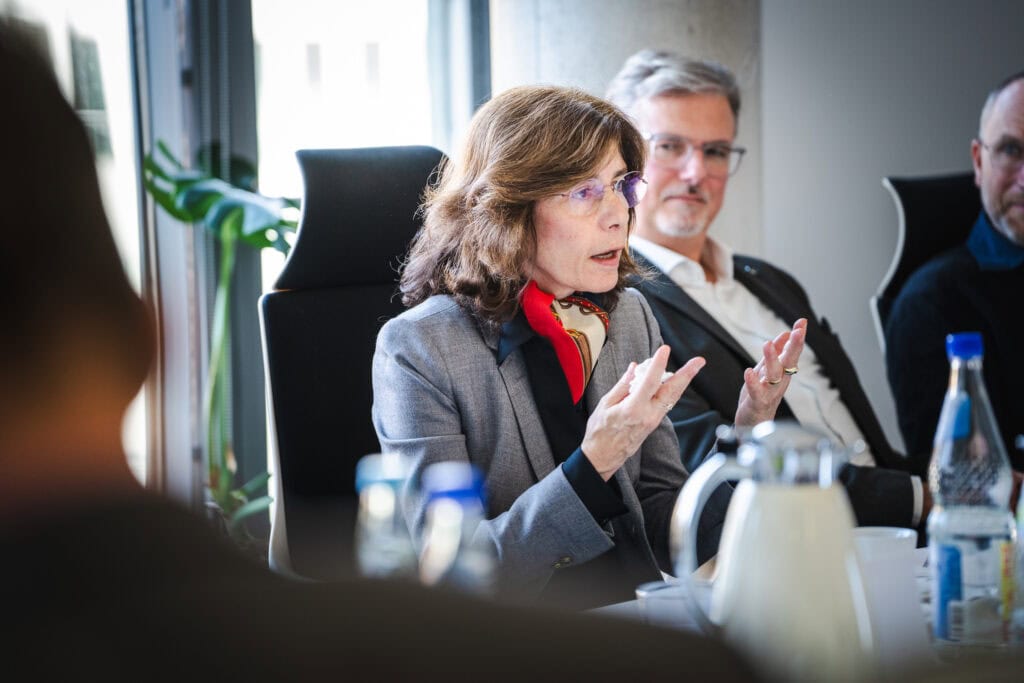
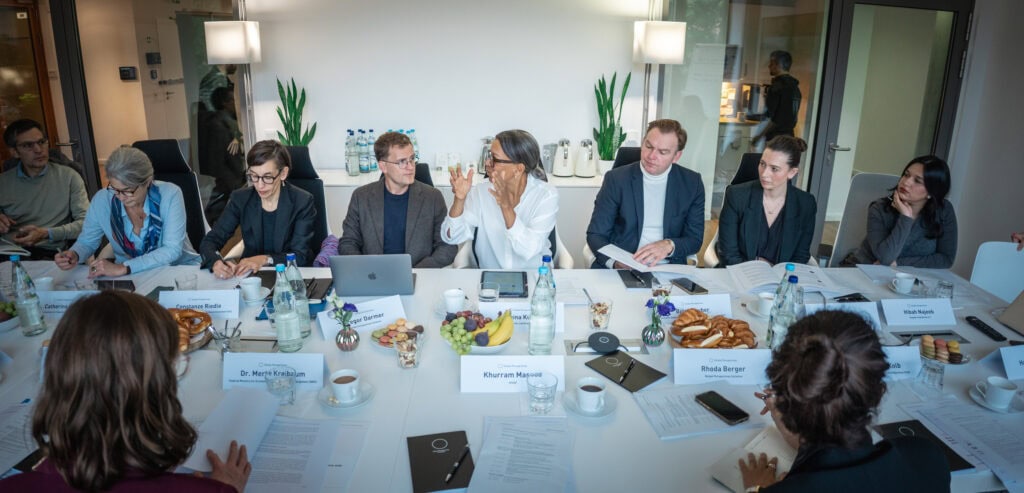
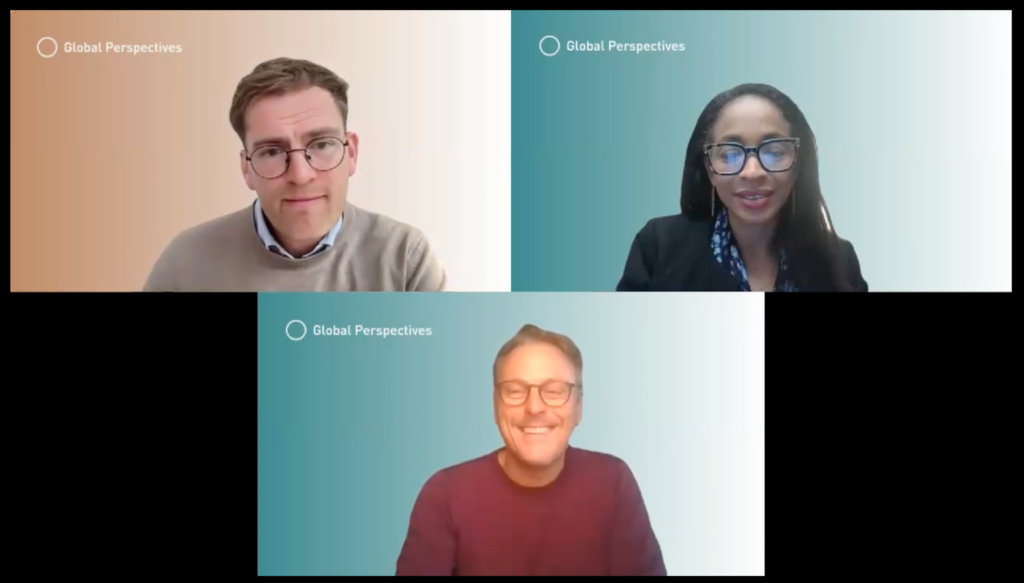
Recent changes in U.S. tariffs policy have triggered new uncertainties and shifts in global trade relations. These changes directly impact the future and strategic course of international development cooperation. Pinelopi K. Goldberg, former Chief Economist of the World Bank and currently teaching at Yale University, has spent her research and professional career exploring the intersections between trade and international development.
The final report of our Commission, “A Changing World – Germany and the Global South,” highlights that development policy can be a valuable tool in times of geopolitical conflict. The recommendations suggest that Germany, as one of the world’s largest export and trading nations, uses its development policy as a strategic instrument in times of geopolitical tension to create a sustainable future.
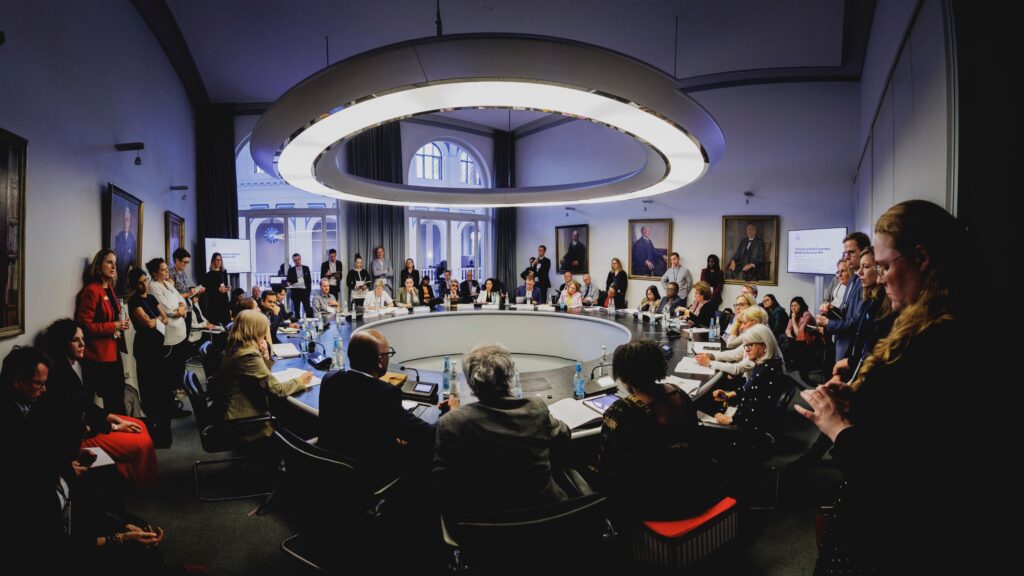
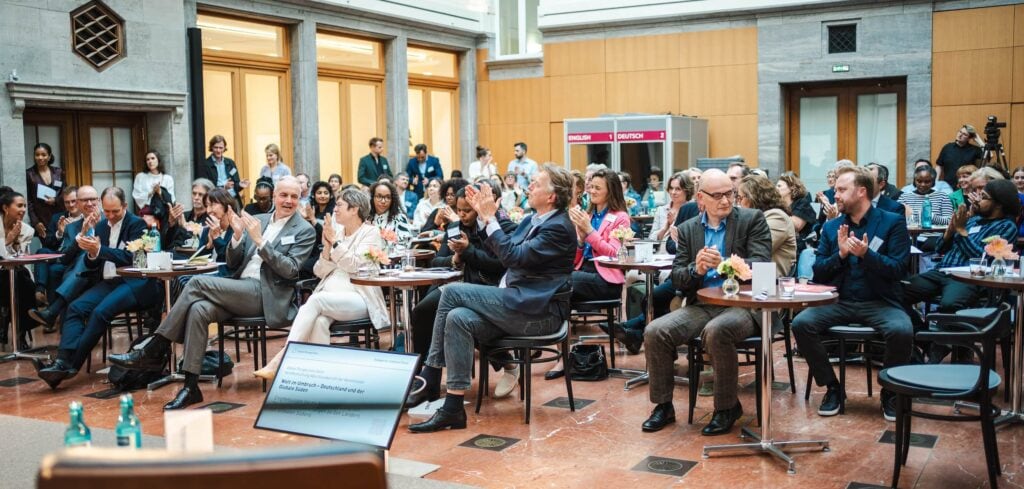
Based on Goldberg’s latest analyses on the impact of global trade on international development, we further discussed the recommendations of the Commission together with partners from politics, academia, business and civil society. Together, we examined how international development policy must be realigned to address these current changes.
Contact Persons
Gregor Darmer, g.darmer@globalperspectives.org
Supported by
Wissenschaftszentrum Berlin für Sozialforschung (WZB)
Circle
We believe in proximity building trust. Our most personal format therefore offers the opportunity to deepen the knowledge of our high-ranking guests in a small circle, together with an exchange of experiences, in dialogue.
Related Program
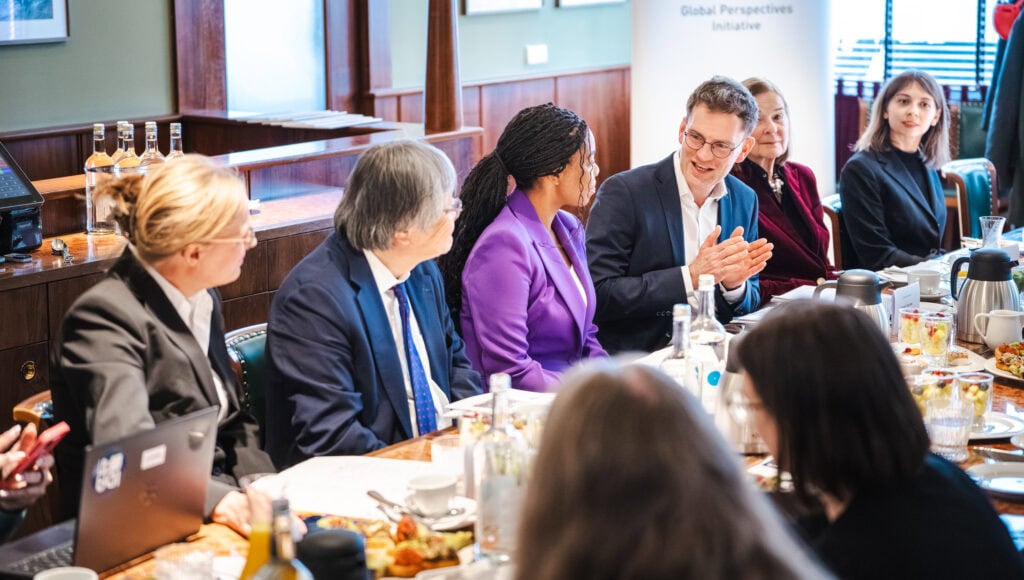
In times of limited resources and geopolitical tension, multilateral institutions can maximize the impact of existing development funding.
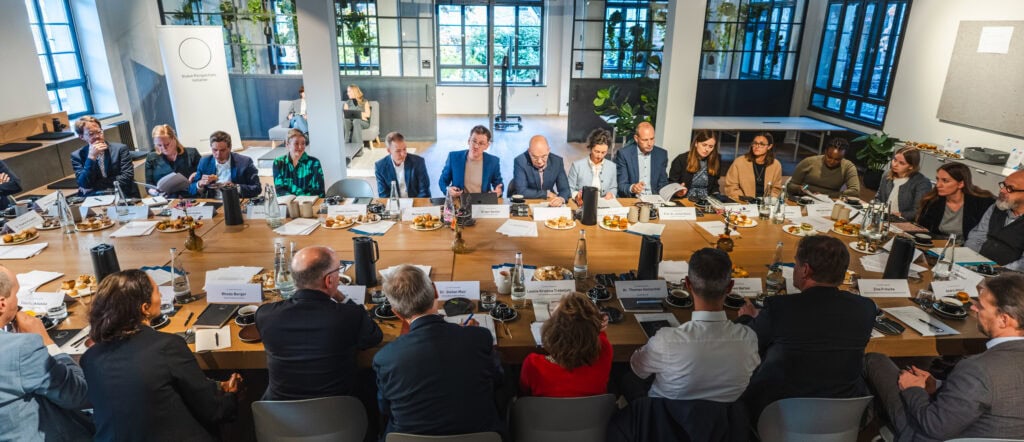
We discussed with State Secretary Niels Annen how development policy can be integrated into networked foreign, security, and economic policies.
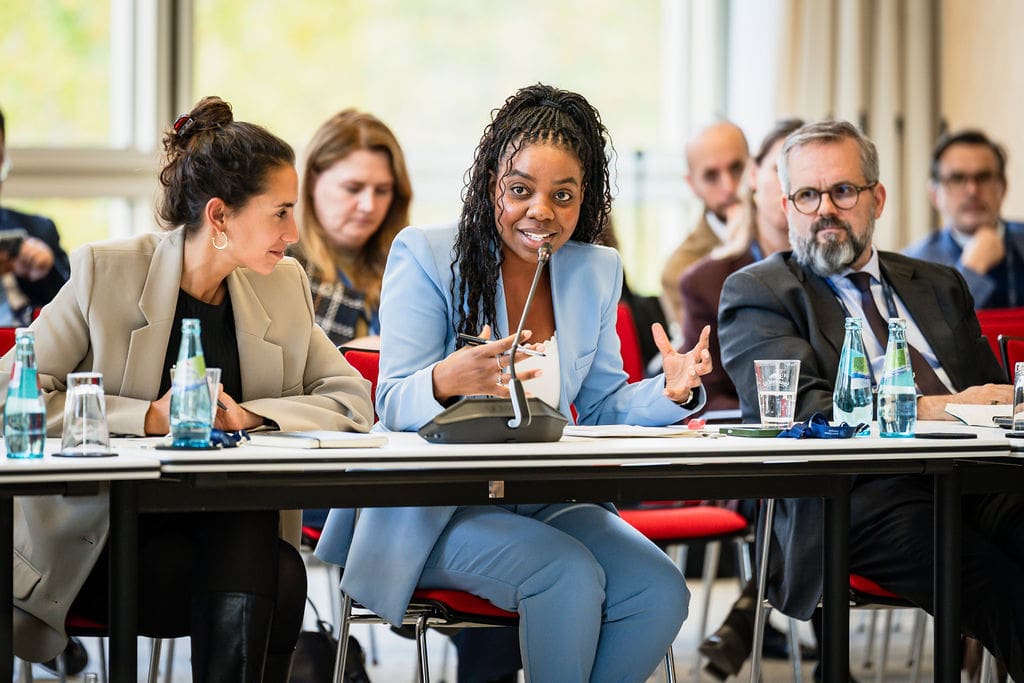
As traditional trade relations shift, strengthening local value chains, enhancing trade agreements, and mobilizing private capital are key to building more resilient and mutually beneficial economies.
Germany is a country of immigration. Building on our Commission's recommendations for action, we discussed ways to better manage and communicate labor migration.
How can Germany build strong, sustainable relationships with countries in the Global South that benefit both sides? At HSC 2025, we continued the dialogue on the Commission's recommendations.
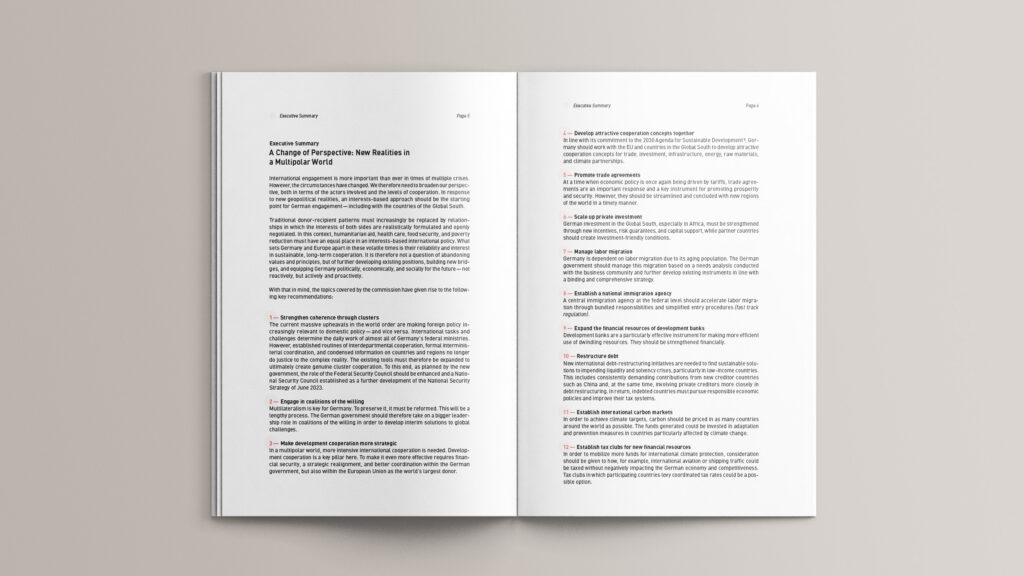
The Commission “A Changing World – Germany and the Global South” presents its recommendations as a basis for addressing key strategic decisions facing Germany today.
How can Germany's international cooperation become more sustainable? After a year of intensive work, the Commission presented its final report recommendations for discussion.

The Commission "A Changing World - Germany and the Global South", chaired by Annegret Kramp-Karrenbauer, presents its first impulses ahead of the German federal elections in 2025.
The Summit of the Future and the Hamburg Sustainability Conference attracted worldwide attention. We discussed the implementation of the resolutions into concrete changes.

The distribution of power in the international system is changing. We interviewed 10 experts from the so-called 'Global South' to get their insight into their perception of Germany's role.
Program Archive
In times of limited resources and geopolitical tension, multilateral institutions can maximize the impact of existing development funding.
Funding cuts are putting health systems across Africa under pressure. Collaboration with Germany and Europe can help strengthen healthcare in the long term.
This interview publication reviews the effects of recent cuts in reproductive health, presents practical options for funding and service delivery, and offers guidance for policymakers and investors.
Africa’s critical minerals are essential to Europe’s future, playing a significant role in the green transition and industrial competitiveness. The Follow-Up to the 9th edition of the Roundtable.
In the ninth edition of the Africa Roundtable, we discussed how Europe and Africa build partnerships that turn Africa's raw material wealth into local value creation.
This paper explores how Africa can add value to its critical minerals, boost local processing, and drive green industrialization while strengthening regional and global supply chains.
We discussed with State Secretary Niels Annen how development policy can be integrated into networked foreign, security, and economic policies.
As traditional trade relations shift, strengthening local value chains, enhancing trade agreements, and mobilizing private capital are key to building more resilient and mutually beneficial economies.
Our speaker James Irungu Mwangi shared his perspective on how to accelerate climate action and investment across Africa. Together, we discussed what it will take to mobilize the green finance needed.