Circle
Women in a Global Context
Advancing Equity and Health
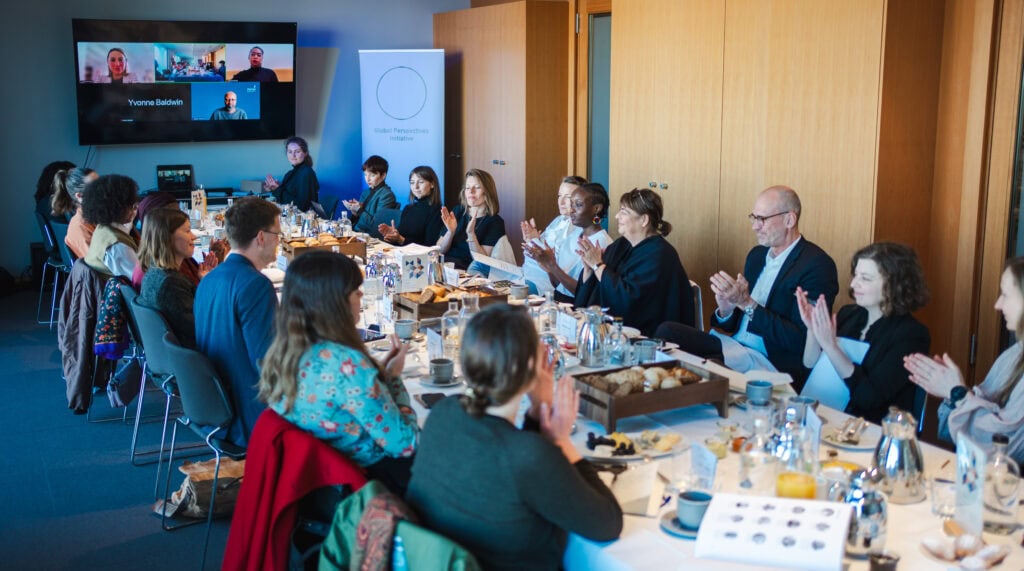
A View Across the Room During "Women in a Global Context"
Informal exchange during dinner with World Bank and Partner African Institute for Development Policy (AFIDEP)
Circle: Women in a Global Context
June 13, 2023
Berlin
How can we enable women worldwide to achieve equality across the board? In 86 countries, women face some level of occupational restriction, and in 95 countries, they are not guaranteed equal pay for equal work. More than two-thirds of the world’s 796 million illiterate people are women. 49% of pregnancies in low- and middle-income countries are unintended. At this dinner, we highlight the work of the World Bank and the Global Financing Facility (GFF). Strengthening political will and understanding women’s diverse cultural backgrounds and specific needs are critical success factors for achieving health equity and women’s empowerment.
- Which challenges exist for health, social and economic equality? Where do actions need to be taken by European and global partners?
- What is the current state of sexual and reproductive health (SRH) in Africa?
- How can Germany’s feminist development and foreign policy support equality and access to basic socio-economic needs for women worldwide?
Contact Persons
Rhoda Berger, r.berger@globalperspectives.org
Sabrina Rupprecht, s.rupprecht@globalperspectives.org
Supported by
Circle
We believe in proximity building trust. Our most personal format therefore offers the opportunity to deepen the knowledge of our high-ranking guests in a small circle, together with an exchange of experiences, in dialogue.
Related Program
Funding cuts are putting health systems across Africa under pressure. Collaboration with Germany and Europe can help strengthen healthcare in the long term.
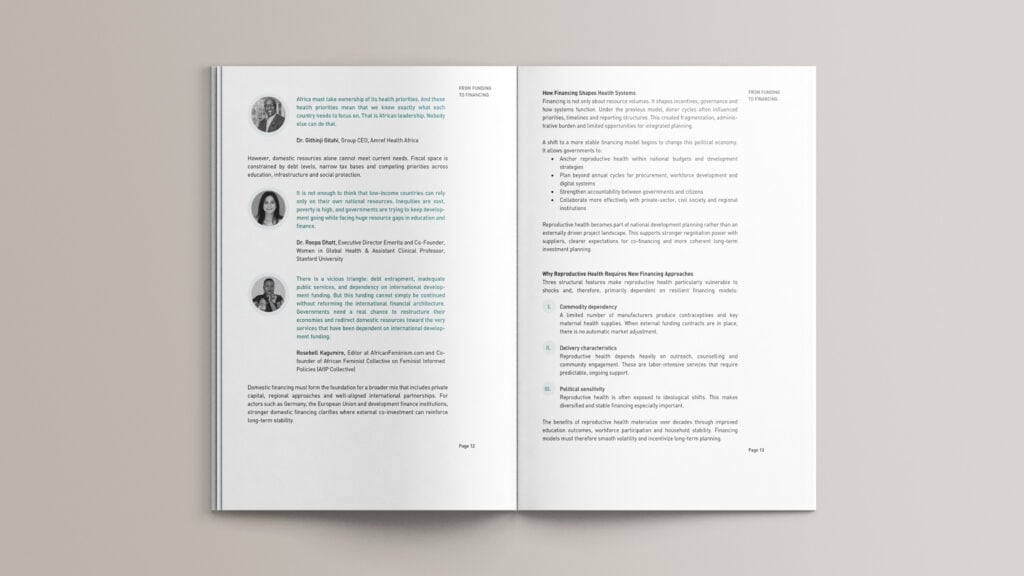
This interview publication reviews the effects of recent cuts in reproductive health, presents practical options for funding and service delivery, and offers guidance for policymakers and investors.

Investments in women's health are threatened by budget cuts and anti-gender movements. In our webinar, we discussed innovative strategies to drive progress in our digital dialogue.

The inequalities in the global health system have a significant impact on the financial situation of women. We discussed economic growth through equal opportunities.

Together with partner The ONE Campaign, we will discuss factors that prevent women from taking leadership positions in the health sector at the World Health Summit 2023.

We discuss family planning, sexual and reproductive health (SRH) with Ulle Schauws and Dr. Eliya Zulu. SRH is the focus of feminist foreign policy.

In times of crisis, women and girls are particularly affected, and access to safe and affordable sexual and reproductive health (SRH) is crucial.

The Covid-19 pandemic has in many ways exacerbated pre-existing inequalities. At the World Health Summit, we discussed this with H.E. Prof Awa Marie Coll Seck and Dr Eckhart von Hirschhausen.
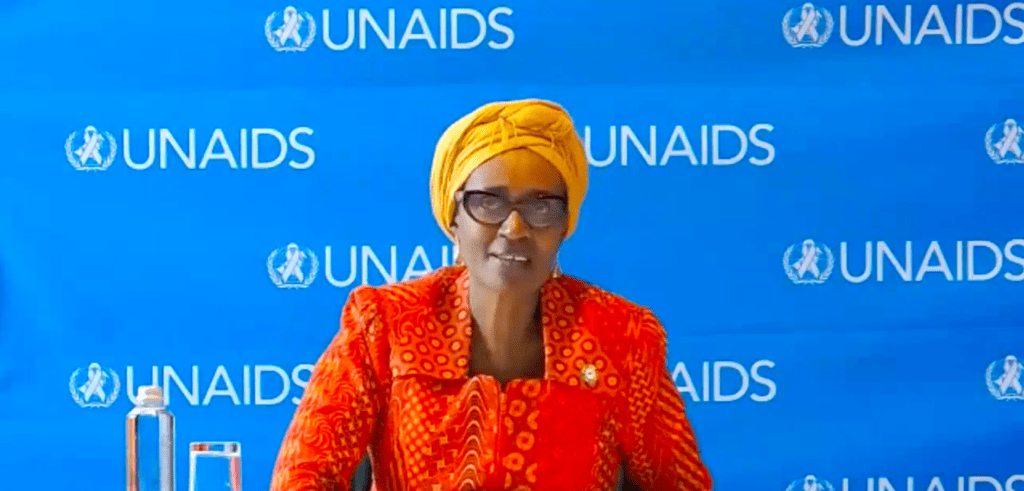
Winnie Byanyima, Peter Sands, and Dr. Zolelwa Sifumba conversed with press representatives about global developments in the fight against AIDS, before and during the COVID-19 pandemic.
Program Archive
test
No continent can safeguard its health security alone. Shared health security is therefore a matter of mutual interest. The action recommendations of the tenth conference.
We brought together policymakers and experts at the German Bundestag to discuss how Germany can strengthen Defense, Diplomacy, and Development as equal pillars of its foreign and security policy.
The impacts of climate change are being felt around the world. At the same time, there are reasons for hope. Together with Dr. Ani Dasgupta, we explored why the climate crisis calls for more optimism.
Health security in Europe and Africa is closely interconnected. We discussed stronger collaboration through investment in local production, health equity biotechnology, research, and innovation.
Africa is emerging as a major hub for innovation and artificial intelligence. With leading African voices from Big Tech, academia, and innovation, we highlighted AI innovation across the continent.
Climate policy is security policy. We discussed how Europe can work with countries in the Global South to implement concrete measures that benefit both sides.
At the launch of the Alliance for Integrated Security, we discussed the current geopolitical challenges and identified potential areas of cooperation between Germany and the Global South.
As global conflicts increase and uncertainty rises, Europe and Germany must take greater responsibility for their future and adopt a broader approach to security.