Salon
Shaping Global Development
Strengthening Africa's Innovative Capacity - Munich Security Conference 2017
Salon: Shaping Global Development
February 17, 2017
Technical University of Munich
The population of the African continent will double by 2050. The continent’s inquisitive and creative youth harbors enormous potential, and chances are promising that Africa can become a continent of sustainable development and stability. At the same time, population growth has a fundamental impact on future trends such as nutrition, health, energy supply, education and employment, as well as the protection of natural livelihoods.

How can Germany, the African continent and the world shape globalisation together and strengthen Africa's innovative power?
Exchange between Dr. Gerd Müller and Bill Gates at the Side Event "Shaping Global Development" at the Munich Security Conference
Africa is more than just the cradle of humanity – our future will be decided on the continent. How can we overcome the major challenges together? How can we shape globalisation and thus a future together with Africa that is fair, sustainable and safe for all?
Contact Persons
Gregor Darmer, g.darmer@globalperspectives.org
Supported by
BMZ Bundesministerium für wirtschaftliche Zusammenarbeit und Entwicklung
MSC Münchner Sicherheitskonferenz
TUM Technische Universität München
Salon
Continuous dialogue creates awareness for the urgent questions of our time. In salons, renowned experts open the discussion with our selected guests from business, politics and society.
Related Program
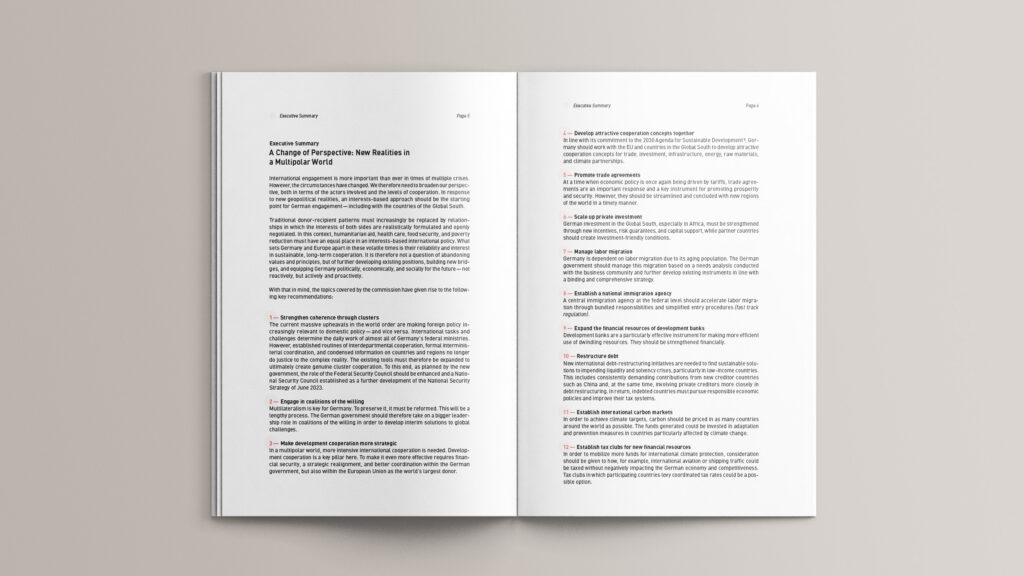
The Commission “A Changing World – Germany and the Global South” presents its recommendations as a basis for addressing key strategic decisions facing Germany today.

Together with the Institut für Demoskopie Allensbach, we interviewed experts from the African continent on their perspectives on the German Africa Policy.
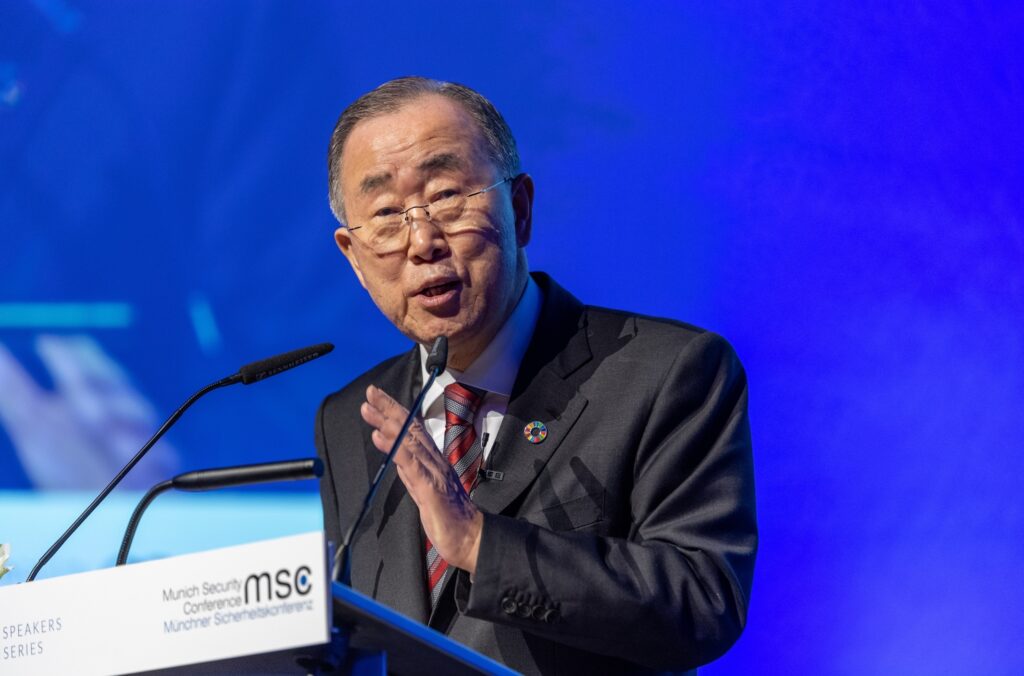
The world order is changing, with countries in the Global South gaining in importance. What role will multilateral cooperation play in the future?
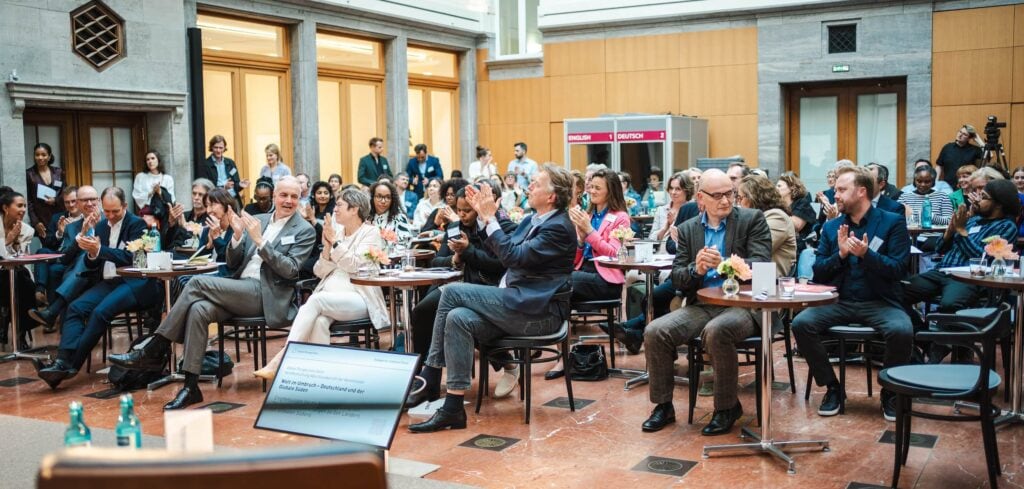
How can Germany's international cooperation become more sustainable? After a year of intensive work, the Commission presented its final report recommendations for discussion.

As the side event to the annual Ibrahim Governance Weekend, we aim to identify the opportunities to deepen trade and investment relations as well as leveraging private and institutional funding.

At the first edition of The Africa Roundtable, we discussed how the recovery of the post-Covid economy can succeed and why this requires climate protection and cooperation.

The Commission "A Changing World - Germany and the Global South", chaired by Annegret Kramp-Karrenbauer, presents its first impulses ahead of the German federal elections in 2025.
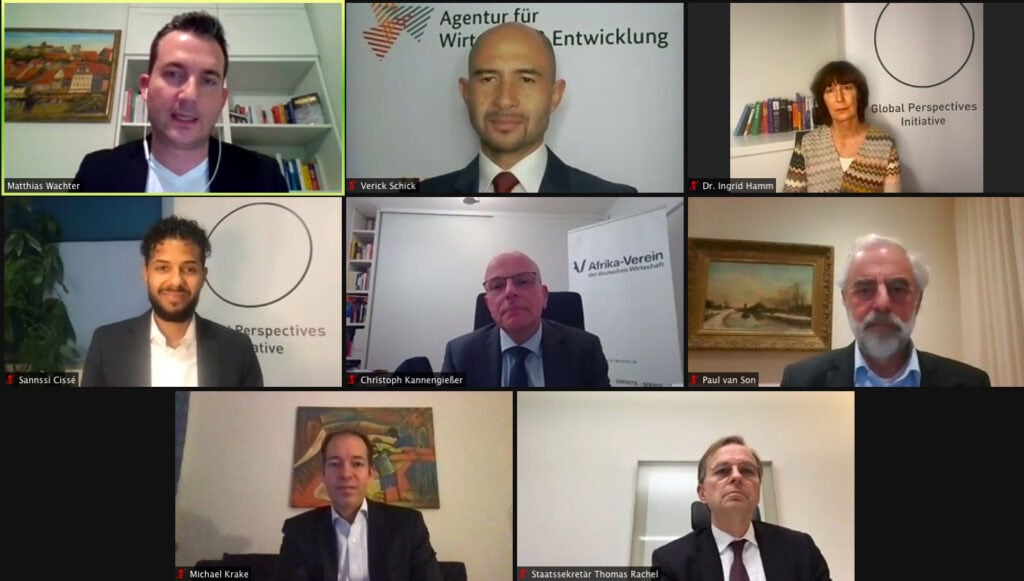
Green hydrogen can contribute to diversifying the African economy and to providing climate-neutral energy supply in Europe. How can these energy partnerships be established between the two continents?
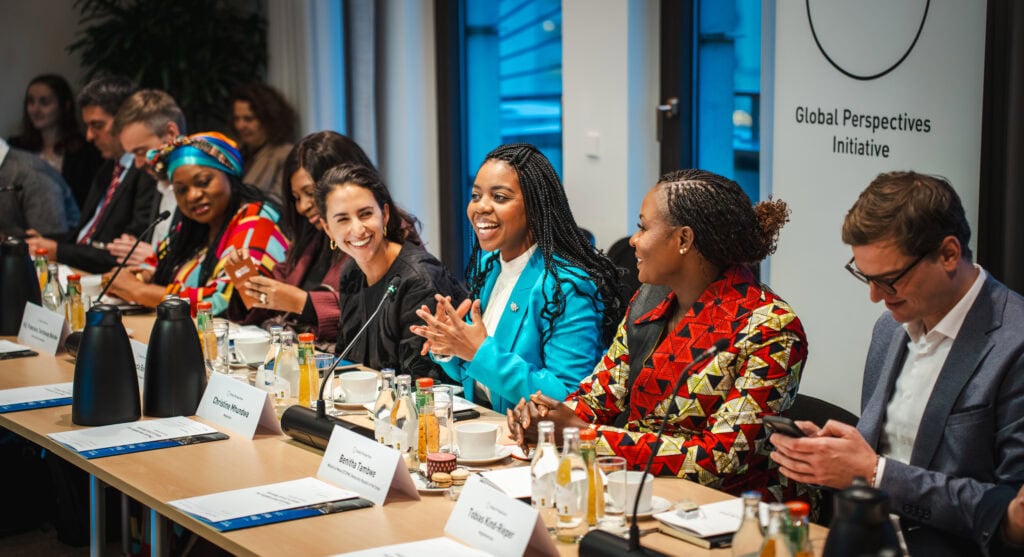
In the ninth edition of the Africa Roundtable, we discussed how Europe and Africa build partnerships that turn Africa's raw material wealth into local value creation.
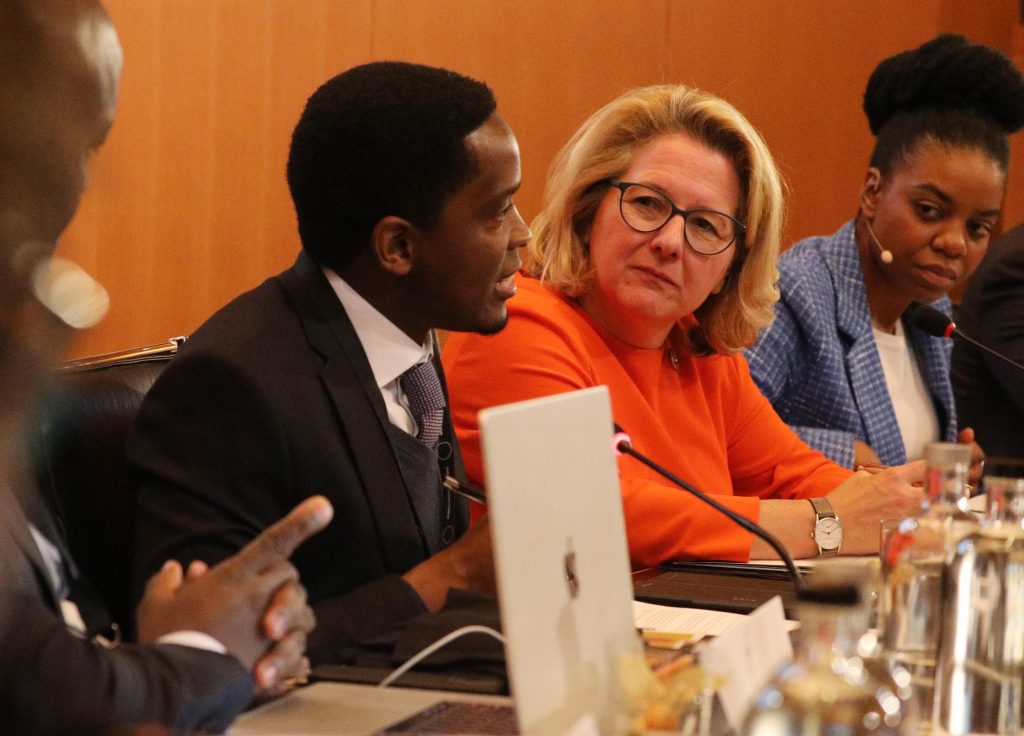
The fifth edition of The Africa Roundtable focussed on employability, skills and training and examine the possibilities of equal education and training for Africa's youth.
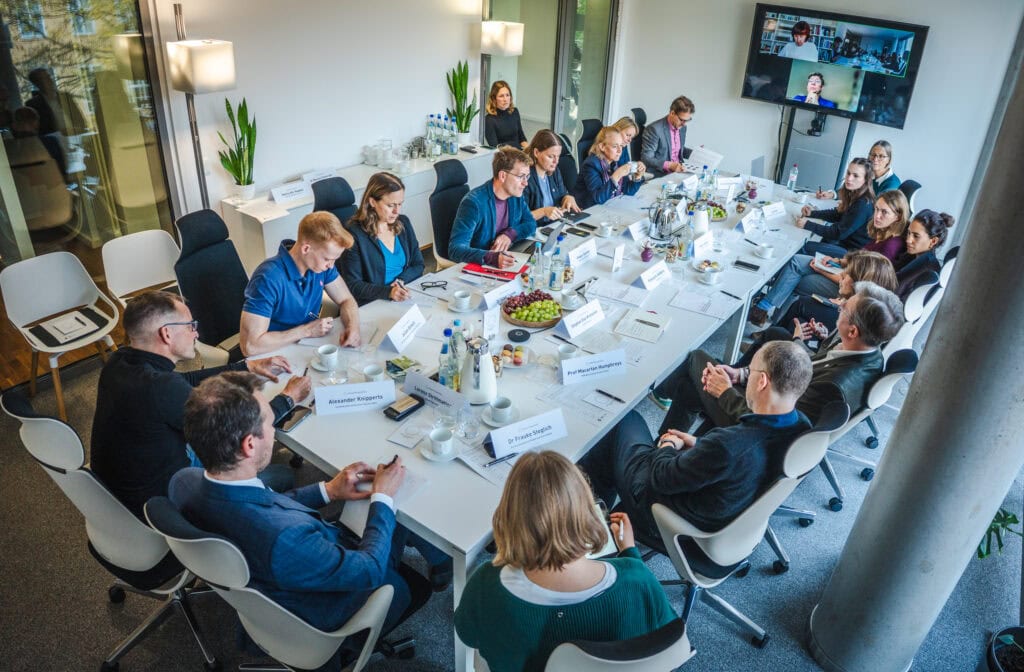
US tariffs changes are causing new uncertainties in global trade. Together with ONE and Pinelopi K. Goldberg, we discussed how international development policy needs to be realigned.

We are at a turning point in European-African economic relations. The action recommendations of the fourth conference.

The distribution of power in the international system is changing. We interviewed 10 experts from the so-called 'Global South' to get their insight into their perception of Germany's role.
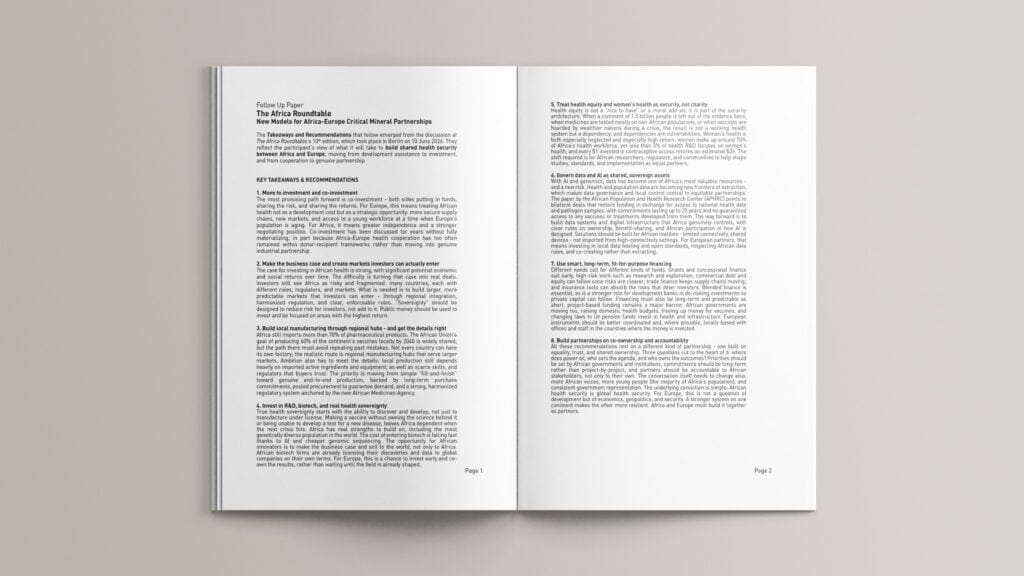
No continent can safeguard its health security alone. Shared health security is therefore a matter of mutual interest. The action recommendations of the tenth conference.

The sixth edition of the Africa Roundtable focuses on how the African continent can unlock its full potential as an agricultural powerhouse.
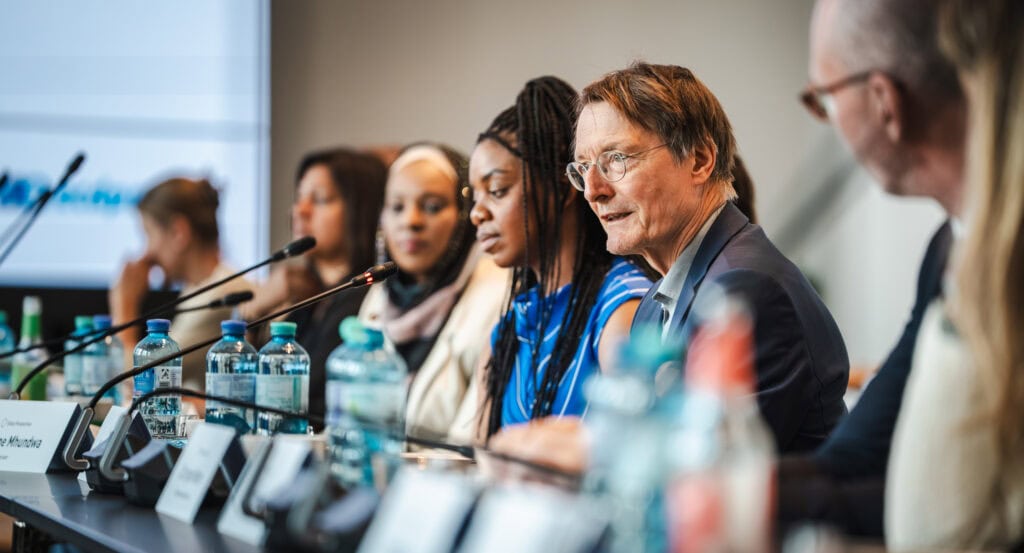
Health security in Europe and Africa is closely interconnected. We discussed stronger collaboration through investment in local production, health equity biotechnology, research, and innovation.
Program Archive
No continent can safeguard its health security alone. Shared health security is therefore a matter of mutual interest. The action recommendations of the tenth conference.
We brought together policymakers and experts at the German Bundestag to discuss how Germany can strengthen Defense, Diplomacy, and Development as equal pillars of its foreign and security policy.
The impacts of climate change are being felt around the world. At the same time, there are reasons for hope. Together with Dr. Ani Dasgupta, we explored why the climate crisis calls for more optimism.
Health security in Europe and Africa is closely interconnected. We discussed stronger collaboration through investment in local production, health equity biotechnology, research, and innovation.
Africa is emerging as a major hub for innovation and artificial intelligence. With leading African voices from Big Tech, academia, and innovation, we highlighted AI innovation across the continent.
Climate policy is security policy. We discussed how Europe can work with countries in the Global South to implement concrete measures that benefit both sides.
At the launch of the Alliance for Integrated Security, we discussed the current geopolitical challenges and identified potential areas of cooperation between Germany and the Global South.
As global conflicts increase and uncertainty rises, Europe and Germany must take greater responsibility for their future and adopt a broader approach to security.
Europe’s access to critical minerals in Africa depends crucially on stronger private sector engagement. We have now taken the recommendations further.