Publications
Building Shared Health Security: An Investment Agenda for Africa and Europe
Action Recommendations from The Africa Roundtable N°10
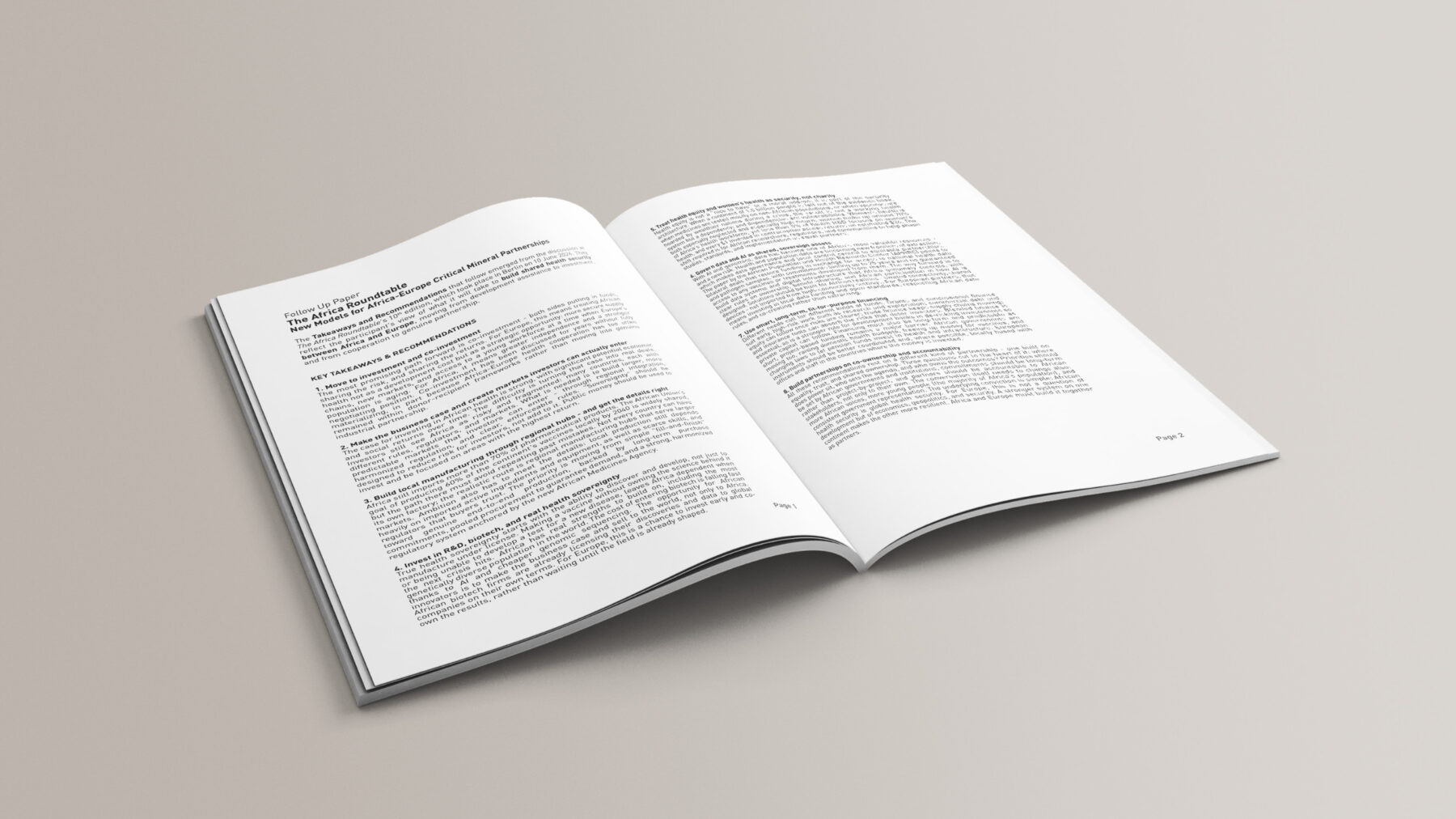
The Africa Roundtable in Berlin 2026
Building Shared Health Security: An Investment Agenda for Africa and Europe
Publications: Building Shared Health Security: An Investment Agenda for Africa and Europe
June 18, 2026
Africa is home to 1.4 billion people and bears a disproportionate share of the global disease burden, yet health systems across the continent remain severely under-resourced. At the same time, major donors, including the United States, are reducing official development assistance for global health, increasing pressure on already stretched systems.
Protecting global health security requires shared responsibility. Stronger African health systems are not only a matter of solidarity; they are in everyone’s interest. They contribute to more resilient economies, supply chains, and societies in Europe and beyond. The opportunity for Europe is to combine its strengths in long-term partnership and high standards with greater speed, investment, and commercial ambition.
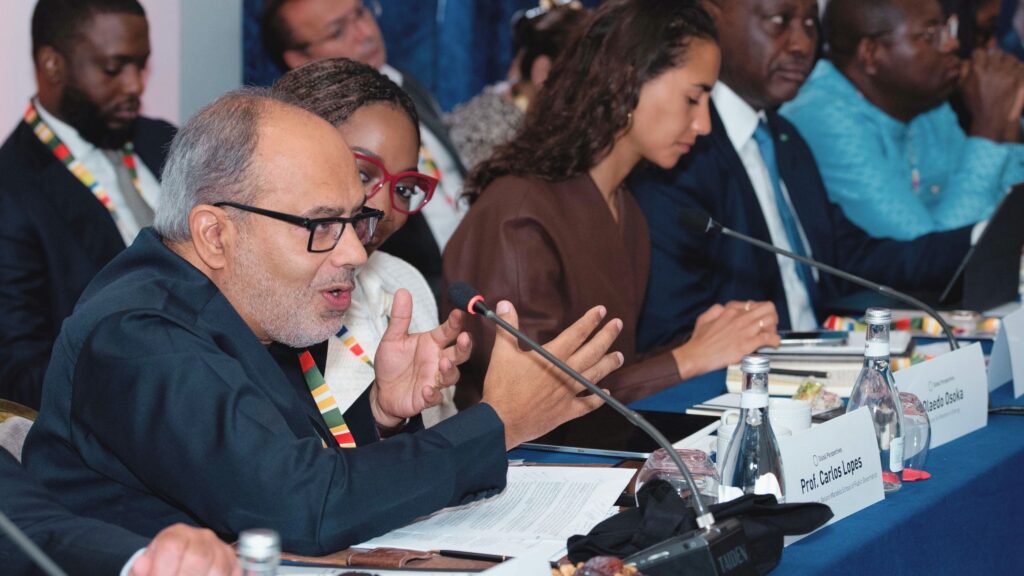
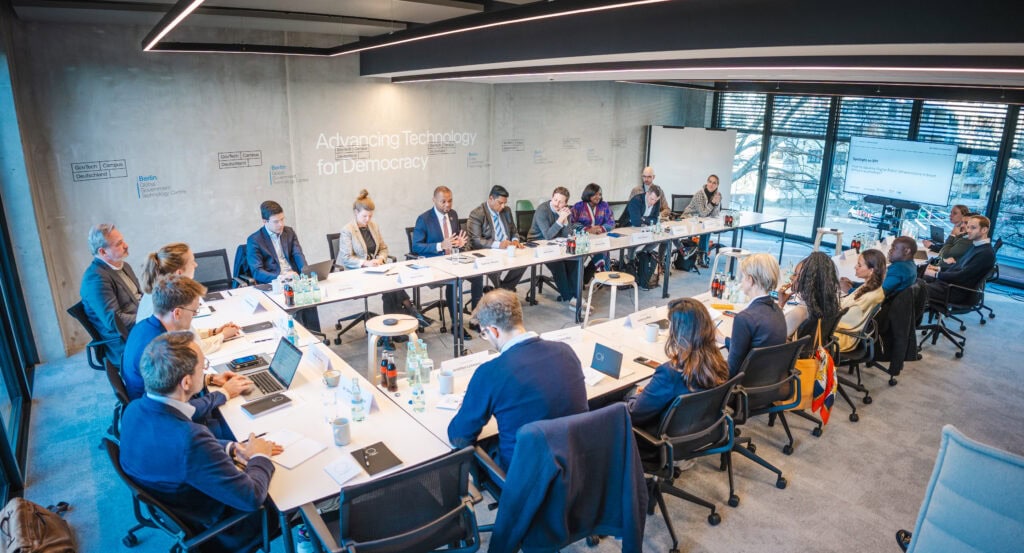
The 10th edition of The Africa Roundtable brought together leaders from government, business, research, and civil society across Africa and Europe to explore how the two continents can build shared health security. Our discussion centered on three areas where closer cooperation could have the greatest impact: manufacturing, supply chains, and biotechnology; research, innovation, and data; and sexual and reproductive health and rights.
Recommendations for Action
Investment and Co-Investment
Co-investment between contributing funds, sharing risk and returns offers path where Europe treats African health as strategic opportunity not cost while Africa gains independence stronger negotiating position
Create New Markets
The case for investing in African health is strong, with major economic and social returns, but success depends on building predictable markets through integration, harmonized regulation, and enforceable rules.
Local Manufacturing and Regional Hubs
Local production still depends on imported active ingredients, equipment, scarce skills, and trusted regulators. The priority is shifting from “fill-and-finish” to end-to-end manufacturing, backed by long-term purchase commitments, pooled procurement, and an aligned regulatory system anchored by the African Medicines Agency.
R&D, Biotech, and Health Sovereignty
True health sovereignty begins with discovery and development, not just licensed manufacturing. African biotech firms already license discoveries and data on their own terms. Europe should invest early and co-own outcomes rather than enter once the field is set.
Health Equity and Women’s Health
Health equity is not a “nice to have” but part of the security architecture. Women make up around 70% of Africa’s health workforce, yet less than 5% of health R&D targets women’s health. The shift required is African researchers, regulators, and communities shaping studies, standards, and implementation as equal partners.
Data and AI
With AI and genomics, data is Africa’s valuable resource and risk, with health data extraction rising, requiring governance, local control, Africa-owned infrastructure, fair ownership, benefit-sharing, AI participation.
Longterm Financing
Financing must be long-term and predictable, as short project-based funding remains a barrier. African governments are raising health budgets and reforming laws to unlock pension fund investment, while European instruments should be coordinated and locally based where investments occur.
Co-Ownership and Accountability
African health security is global health security. For Europe, this is not a question of development but of economics, geopolitics, and security. A stronger system on one continent makes the other more resilient. Africa and Europe must build it together as partners.
Contact Persons
Stephanie Igunbor, s.igunbor@globalperspectives.org
Supported by
GIZ Deutsche Gesellschaft für internationale Zusammenarbeit
BDI Bundesverband der Deutschen Industrie
BMZ Bundesministerium für wirtschaftliche Zusammenarbeit und Entwicklung
Publications
Our publications aim to stimulate questioning and discussion. They are the result of a deep engagement with the focus topics of our work and enable a fact-based dialogue.
Related Program
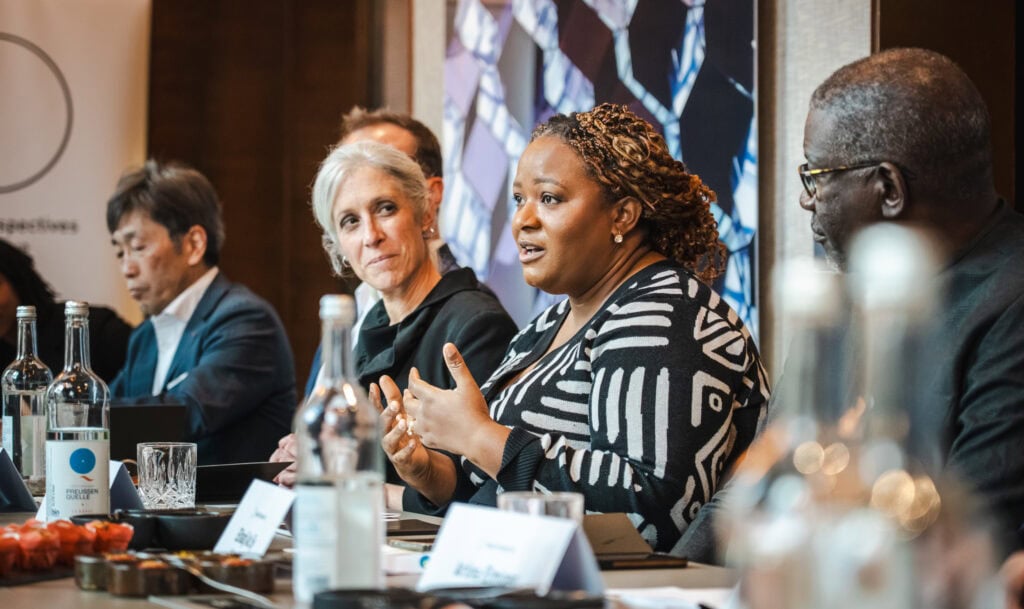
Africa is building its own capacity in health research, diagnostics, and vaccine production. This is creating new avenues for cooperation with Europe on health security.
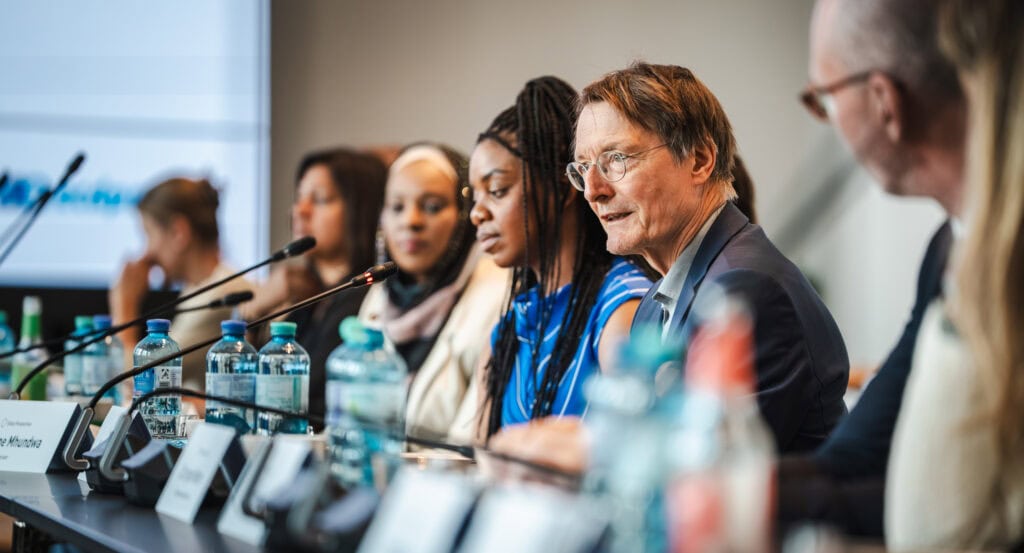
Health security in Europe and Africa is closely interconnected. We discussed stronger collaboration through investment in local production, health equity biotechnology, research, and innovation.
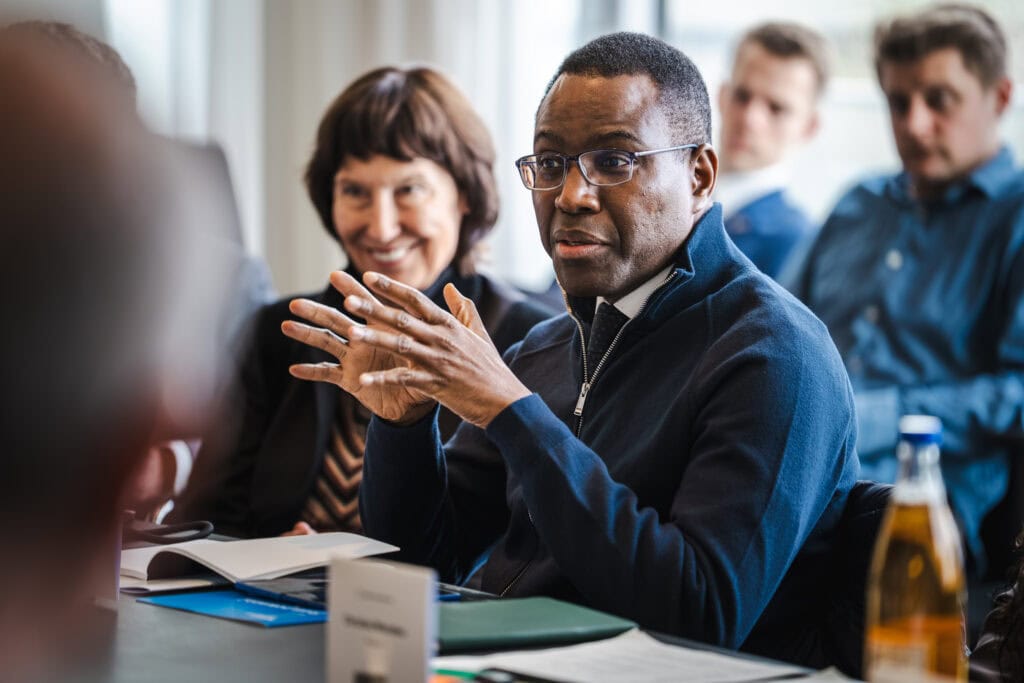
Europe’s access to critical minerals in Africa depends crucially on stronger private sector engagement. We have now taken the recommendations further.
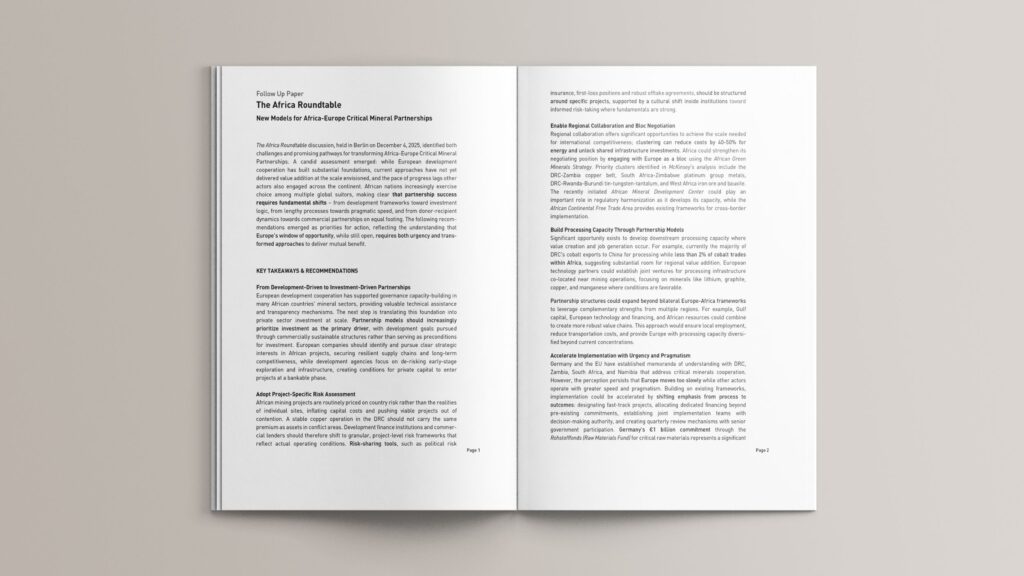
Africa’s critical minerals are essential to Europe’s future, playing a significant role in the green transition and industrial competitiveness. The Follow-Up to the 9th edition of the Roundtable.
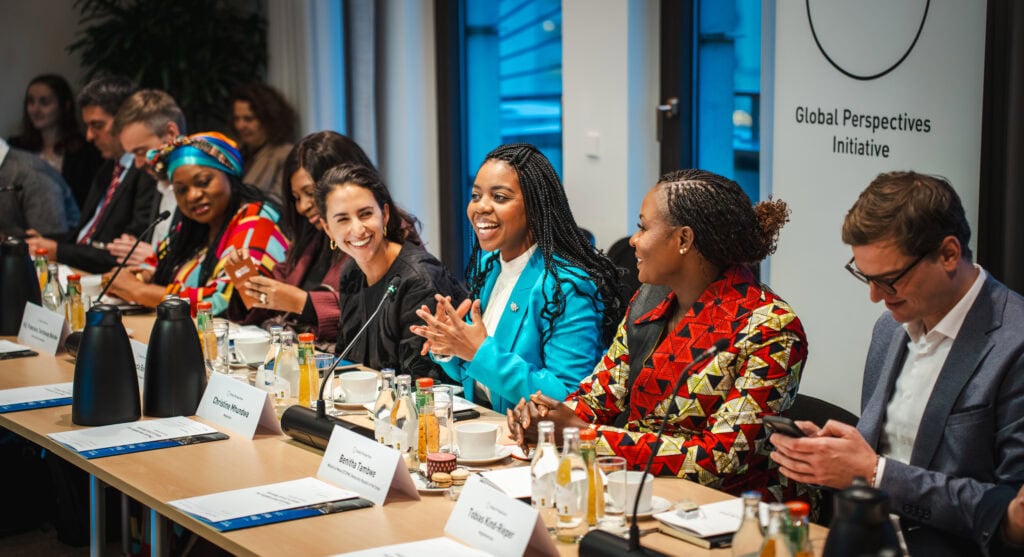
In the ninth edition of the Africa Roundtable, we discussed how Europe and Africa build partnerships that turn Africa's raw material wealth into local value creation.
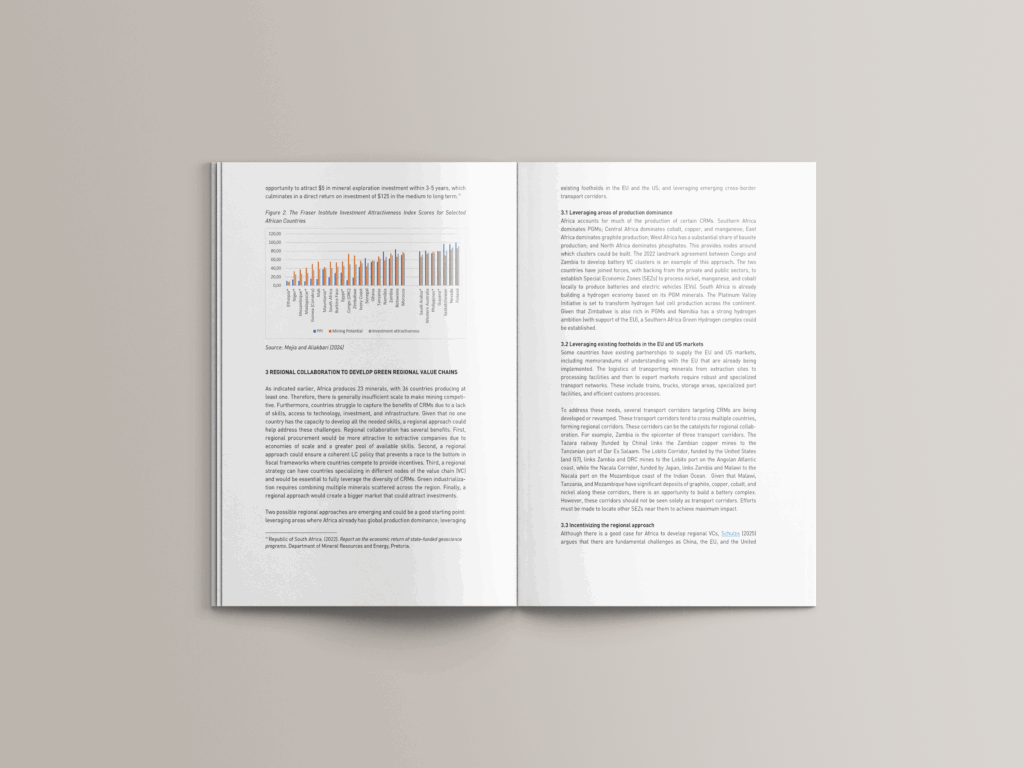
This paper explores how Africa can add value to its critical minerals, boost local processing, and drive green industrialization while strengthening regional and global supply chains.

Our speaker James Irungu Mwangi shared his perspective on how to accelerate climate action and investment across Africa. Together, we discussed what it will take to mobilize the green finance needed.
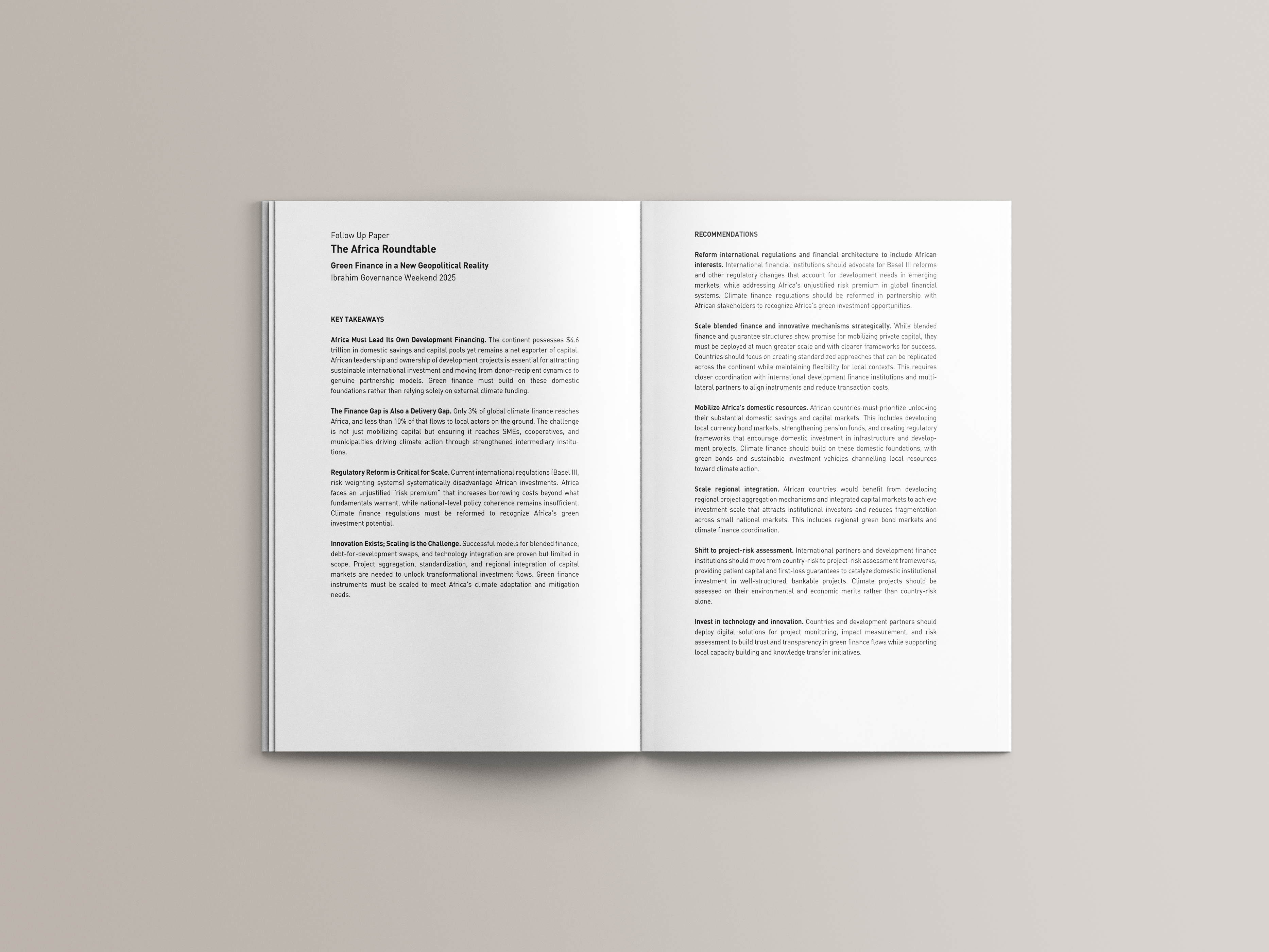
Amid shifting global dynamics, investing in Africa’s strengths in renewable energy and climate action is more urgent than ever. The action recommendations of the eighth conference.
At the eighth edition of The Africa Roundtable, we discussed how to rethink and strengthen sustainable finance in Africa through strategic partnerships with Europe.
DPI can help bring large populations online, driving economic growth. We highlighted the range of benefits of this new concept at our follow-up to the seventh edition of The Africa Roundtable.
Program Archive
Africa is building its own capacity in health research, diagnostics, and vaccine production. This is creating new avenues for cooperation with Europe on health security.
What is at stake for Germany and Europe if they do not change course economically? Structural weaknesses, U.S. tariffs, and China’s growing economic power are increasing the tension.
We brought together policymakers and experts at the German Bundestag to discuss how Germany can strengthen Defense, Diplomacy, and Development as equal pillars of its foreign and security policy.
The impacts of climate change are being felt around the world. At the same time, there are reasons for hope. Together with Dr. Ani Dasgupta, we explored why the climate crisis calls for more optimism.
Health security in Europe and Africa is closely interconnected. We discussed stronger collaboration through investment in local production, health equity biotechnology, research, and innovation.
Africa is emerging as a major hub for innovation and artificial intelligence. With leading African voices from Big Tech, academia, and innovation, we highlighted AI innovation across the continent.
Climate policy is security policy. We discussed how Europe can work with countries in the Global South to implement concrete measures that benefit both sides.
At the launch of the Alliance for Integrated Security, we discussed the current geopolitical challenges and identified potential areas of cooperation between Germany and the Global South.
As global conflicts increase and uncertainty rises, Europe and Germany must take greater responsibility for their future and adopt a broader approach to security.