Artikel
The year small language models change the AI conversation
“You can still solve major problems with AI without needing billions and billions of dollars.”
Artikel: The year small language models change the AI conversation
2. Oktober 2026
Temie Giwa-Tubosun
One of my key hypotheses for what the future of healthcare, global health and local health will look like is the importance of still innovating within the AI context. The world is having a big conversation about AI, and on the continent we are using a different type of modeling to build it out. There is a lot of use of predictive AI instead of generative AI. Even when we build generative AI models, we see African innovators opting for small language models instead of LLMs. We’re seeing SLMs develop on the continent that focus specifically on the context we are operating in.
At Livebank, for example, we have a small language model that works with small African clinics to help them improve their liquidity. The context is very narrow, but that allows us to build something robust with very little compute and very little available data, while staying cost-effective and impactful. You sit down with a junior accountant in a small hospital and use their data to predict what will happen to their liquidity over time. You hold their hands to understand how they can access capital, and how capital could increase the quality of care they deliver to patients. That changes the strategy and the actual quality of care in that clinic. Tied to the small amount of investment we’re making in generative SLMs, that really changes the conversation.
I think European innovators will start looking at that model instead of focusing on LLMs, which have serious consequences for access to water and the protection of our natural environment. We have been able to show that small language models consume fewer resources and can still add significant impact. I think that’s what is going to start showing up in the world in the next year.
Why the shift is coming
What shows that this shift is coming is the consequence of LLMs. They consume a significant amount of energy and water, and that has consequences for the survival of our planet. Compute is also expensive and will be dominated by markets where an unimaginable amount of capital is going into LLMs. In contexts without that capital, where your problems are very significant and you have a lot of infrastructural constraints, you will need to do something different.
We can’t sit out the AI conversation. If Africa and all the developing parts of the world sit it out, we will not get the benefit of this incredible innovation. So what matters is figuring out the model that works for us. We don’t have Silicon Valley-type capital, but we have ingenuity and very real problems. Small language models will now start showing that you can still solve major problems with AI without needing billions and billions of dollars, without destroying the planet, and without creating all of these bad outcomes for the world.
What leaders can do
Leaders need to be in front of the conversation. We have been building with AI since 2016, using predictive modeling to figure out what demand for key products will look like in the future. One thing we built is an open-source technology called AIRx, which takes historical data, weather patterns and local topography to predict oxygen demand for children in developing communities.
What is critical is that we, as leaders and innovators on the continent, get in front of the conversation. A lot of us sit in our offices solving real problems, with our heads down, focused on hacking the system and building something robust that solves our local constraints. The bad outcome is that we are not showing there is a different way of doing this work, that there are different mechanisms and different types of investment that could change the world. What I want leaders to start doing now is get ahead of that conversation and show the world that there’s a different way.
Contact Persons
Corinna Robertz, c.robertz@globalperspectives.org
Artikel
Wissensaustausch ist entscheidend für die Entwicklungsarbeit der Zukunft. Unsere Artikel machen deshalb unsere Arbeit einem breiteren Personenkreis zugänglich. Sie sind eine Plattform für Expertise, Meinungen und Erfahrungen.
Related Program

Mit einer neuen Raumfahrtbehörde und dem ersten Weltraumbahnhof erregt die afrikanische Raumfahrtindustrie weltweit Aufmerksamkeit. Was bedeutet das für europäisch-afrikanische Zusammenarbeit?
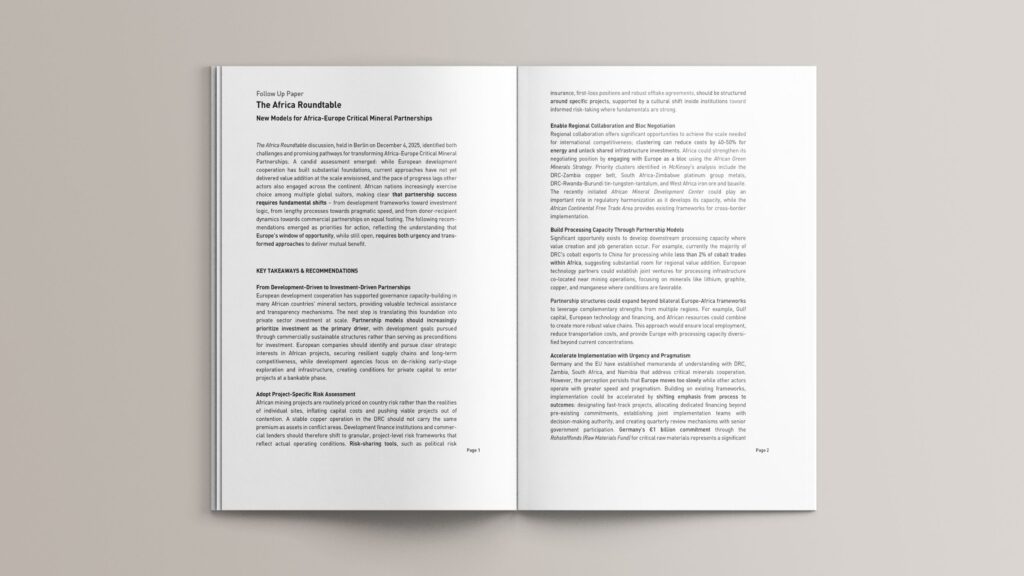
Von Entwicklungshilfe zu gleichberechtigter Partnerschaft im afrikanischen Rohstoffsektor. Ergebnisse der Konferenz The Africa Roundtable N°9.

Bei der neunten Ausgabe des The Africa Roundtable diskutierten wir, wie Europa und Afrika Partnerschaften gestalten können, die den Rohstoffreichtum Afrikas in lokale Wertschöpfung übersetzen.

Künstliche Intelligenz boomt auf dem afrikanischen Kontinenten und das birgt neue Herausforderungen: In unserem Webinar sprechen wir mit KI-Expert:innen über das Potenzial der digitalen Souveränität.
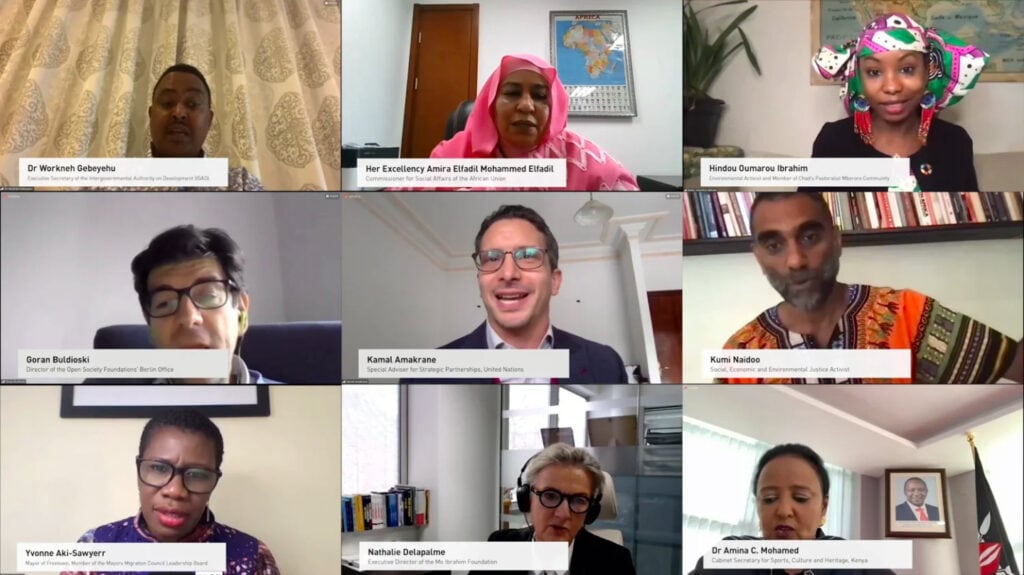
Der Klimawandel zwingt immer mehr Menschen dazu, ihre Heimat zu verlassen. Wir analysierten den Status-Quo und diskutierten mit Akteur:innen aus Afrika und Europa, wie Lösungsansätze aussehen können.
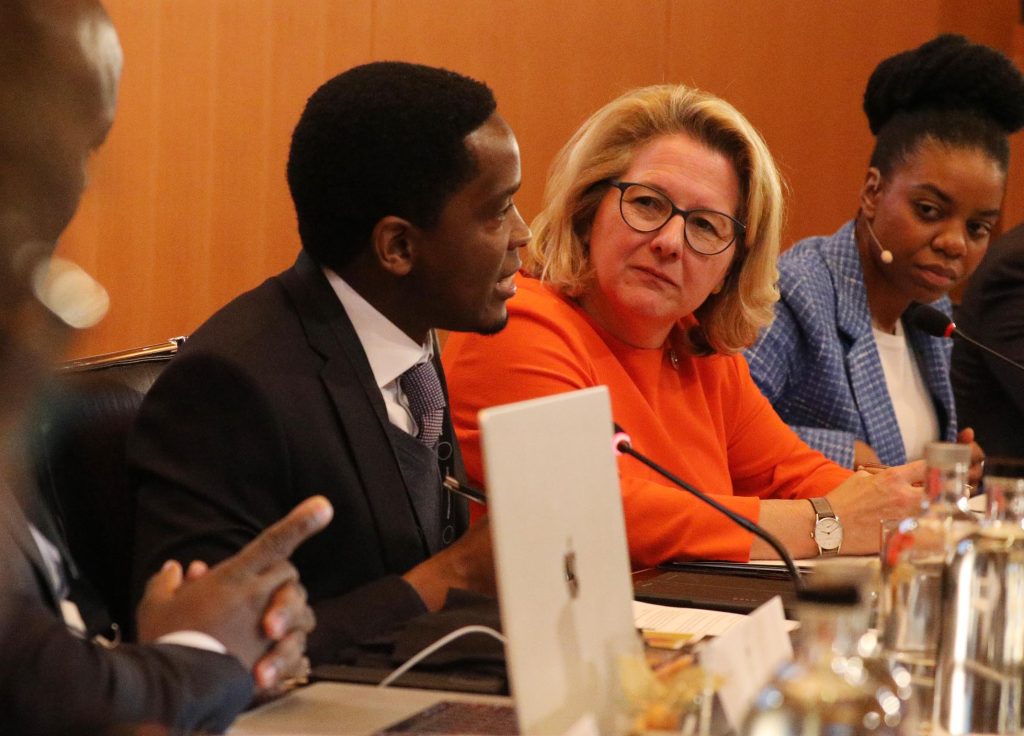
Bei der fünften Ausgabe des The Africa Roundtable wollen wir zum Thema "employability, skills and training" die Möglichkeiten der gerechten Aus- und Weiterbildung für Afrikas Jugend beleuchten.

Die siebte Ausgabe des The Africa Roundtable rückte die Bedeutung von digitaler Infrastruktur und Datensouveränität für die digitale Revolution auf dem afrikanischen Kontinenten in den Fokus.

Politikwissenschaftler Daniel Marwecki über neue Machtzentren, Chinas Position und den notwendigen Zweckoptimismus in Deutschland.
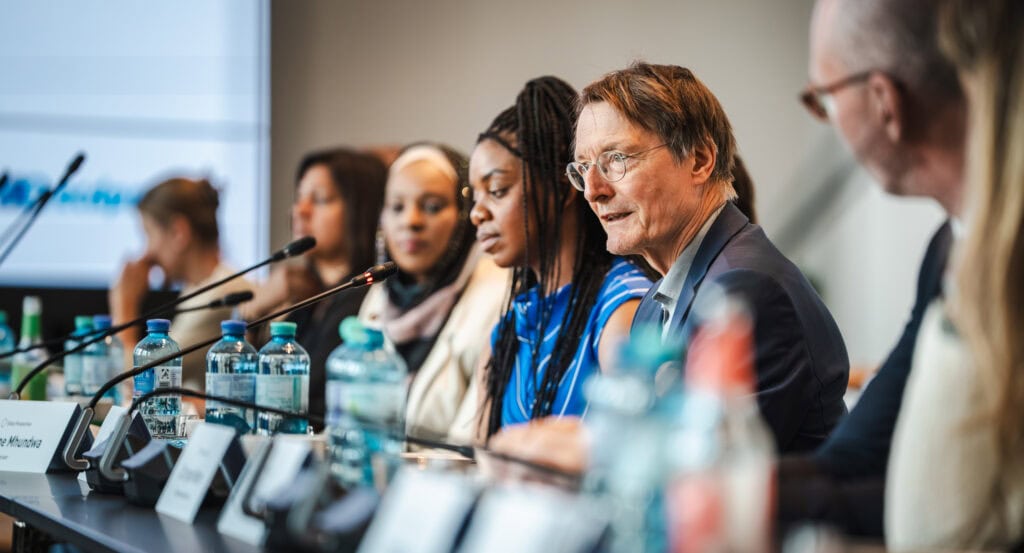
Gesundheitssicherheit in Europa und Afrika ist eng verknüpft. Im Fokus des zehnten The Africa Roundtable standen lokale Produktion, Chancengleichheit, Biotechnologie, Forschung und Innovation.
Mit Beiträgen von Maureen Achieng, Omid Nouripour und H.E. Prof. Judi Wakhungu diskutierten wir u.a. Deutschlands Rolle und Beitrag zur angemessenen Unterstützung von Klimamigrant:innen.
Annegret Kramp-Karrenbauer über Selbst- und Fremdbild, über eine Welt im Umbruch – und darüber, was es kostet, Prinzipien zu halten, aber nicht zu handeln.
Logistik-Experte Tobias Maier über die Wirtschaftsbeziehungen zwischen Deutschland und Afrika, Handelsrouten über die Straße von Hormus und neue Wachstumsmärkte in Subsahara-Afrika.

Unter dem Credo "Roadmap to Africa" wollen wir die Möglichkeiten zur Vertiefung der Handels- und Investitionsbeziehungen sowie zur Mobilisierung privater und institutioneller Finanzierung ausloten.
Programmarchiv
Seit zehn Jahren bringt Global Perspectives führende Persönlichkeiten aus Europa und Afrika zusammen. Wir schaffen Raum für offenen Austausch zu den Fragen, die beide Kontinente verbinden.
Afrikas Infrastruktur wächst, doch Europa droht den Anschluss zu verlieren. Wie können Risiken besser bewertet und Investitionen gezielter umgesetzt werden?
Afrika entwickelt zunehmend eigene Lösungen in Forschung, Diagnostik und Impfstoffproduktion. Das schafft neue Möglichkeiten für die Zusammenarbeit mit Europa bei der Gesundheitssicherheit.
Was steht für Deutschland und Europa auf dem Spiel, wenn sie wirtschaftlich nicht umsteuern? Strukturelle Schwächen, US-Zölle sowie Chinas wachsende Wirtschaftsmacht erhöhen den Druck.
Logistik-Experte Tobias Maier über die Wirtschaftsbeziehungen zwischen Deutschland und Afrika, Handelsrouten über die Straße von Hormus und neue Wachstumsmärkte in Subsahara-Afrika.
Kein Kontinent kann seine Gesundheitssicherheit allein gewährleisten. Sie erfordert global Zusammenarbeit und liegt im gegenseitigen Interesse aller. Die Handlungsempfehlungen der zehnten Konferenz.
Gemeinsam mit ONE diskutierten wir im Bundestag, wie Deutschland Verteidigung, Diplomatie und Entwicklung als gleichwertige Säulen in der Außen- und Sicherheitspolitik stärken kann.
Die Folgen des Klimawandels sind weltweit spürbar. Gleichzeitig gibt es Anlass zur Hoffnung: Gemeinsam mit Dr. Ani Dasgupta haben wir erörtert, warum wir mehr Optimismus in der Klimakrise brauchen.
Politikwissenschaftler Daniel Marwecki über neue Machtzentren, Chinas Position und den notwendigen Zweckoptimismus in Deutschland.