Circle
De-Risking Africa’s Infrastructure Opportunity
Berlin Global Dialogue
Circle: De-Risking Africa’s Infrastructure Opportunity
October 22, 2026
Berlin
Africa’s infrastructure is expanding. Energy, transportation, and digital networks need to keep pace with a growing population and economy. So far, only a few infrastructure projects have materialized between Europe and Africa.
One reason is that investment risks in Africa are often perceived as higher than they actually are. Risks vary significantly by country, sector, and project. Better data and appropriate risk-sharing instruments can help investors assess risks more accurately and deploy capital more effectively.

De-Risking Africa’s Infrastructure Opportunity
Berlin Global Dialogue 2026 © Ana Torres
This also affects Europe’s position in African markets: European companies have technology and expertise to offer, but often approach investment cautiously. Meanwhile, China and other countries are expanding their presence across African markets. Europe risks losing ground on important infrastructure projects and long-term partnerships.
During our session at the Berlin Global Dialogue, we brought together African government representatives and investors, as well as European business and political leaders. We discussed the most pressing infrastructure needs and how different forms of capital, expertise, and local knowledge can work together to turn investment into projects.
Selected Speakers
Contact Persons
Kasia Schwartz, k.schwartz@globalperspectives.org
Supported by
Circle
We believe in proximity building trust. Our most personal format therefore offers the opportunity to deepen the knowledge of our high-ranking guests in a small circle, together with an exchange of experiences, in dialogue.
Related Program

With data emerging as the key driver of future economic power, Africa's digital transformation is critical and urgent. The action recommendations of the seventh conference.
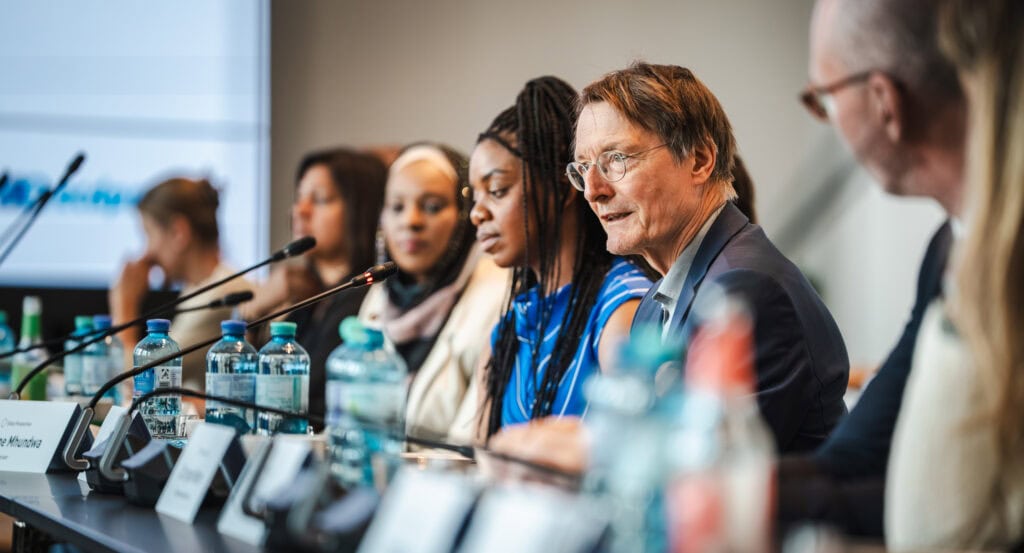
Health security in Europe and Africa is closely interconnected. We discussed stronger collaboration through investment in local production, health equity biotechnology, research, and innovation.
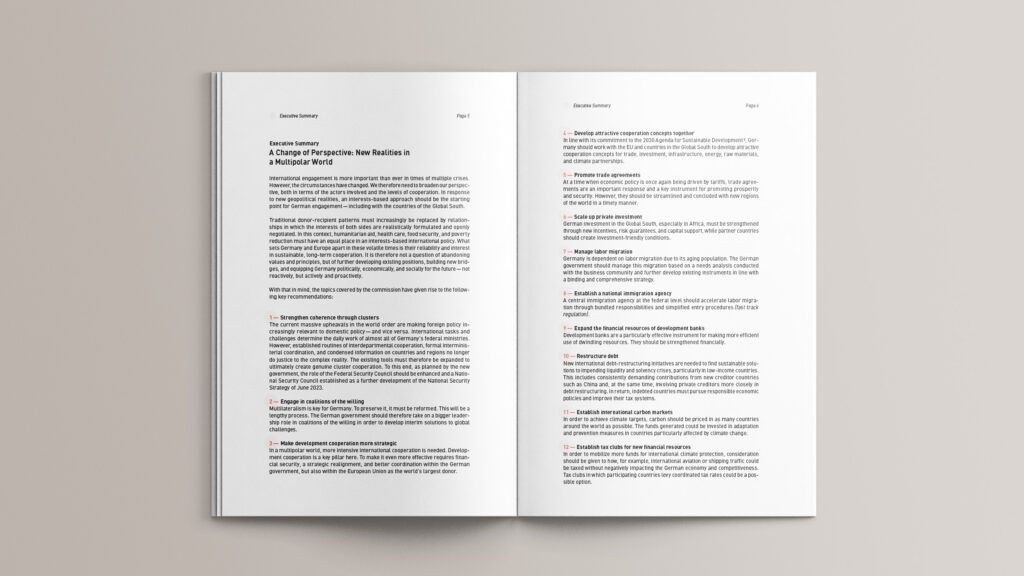
The Commission “A Changing World – Germany and the Global South” presents its recommendations as a basis for addressing key strategic decisions facing Germany today.

The seventh edition of the Africa Roundtable focused on the importance of digital infrastructure and data sovereignty for the digital revolution on the African continent.
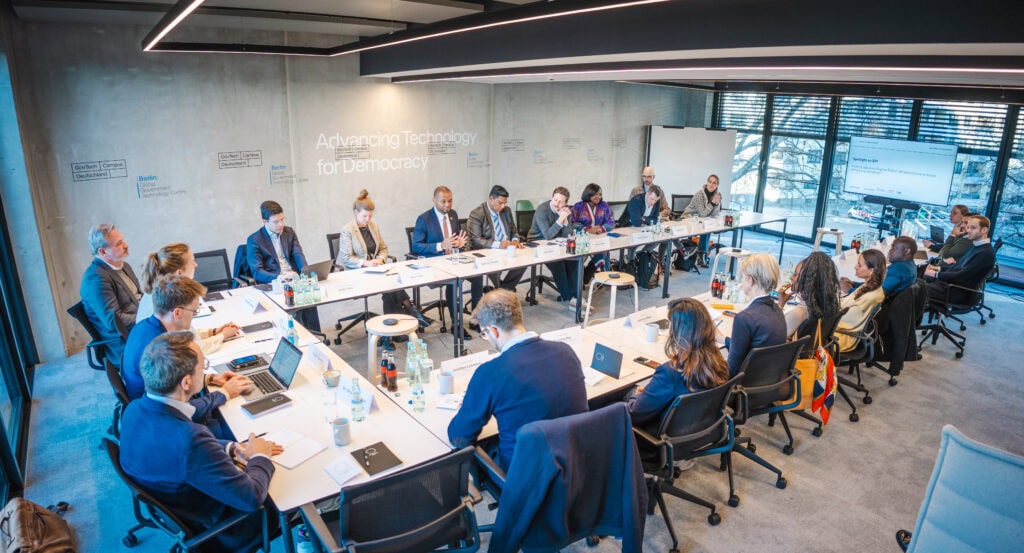
DPI can help bring large populations online, driving economic growth. We highlighted the range of benefits of this new concept at our follow-up to the seventh edition of The Africa Roundtable.

The research paper on food sovereignity in Africa was issued on the occasion of The Africa Roundtable “Growing Africa's Future” 2024 in Berlin.
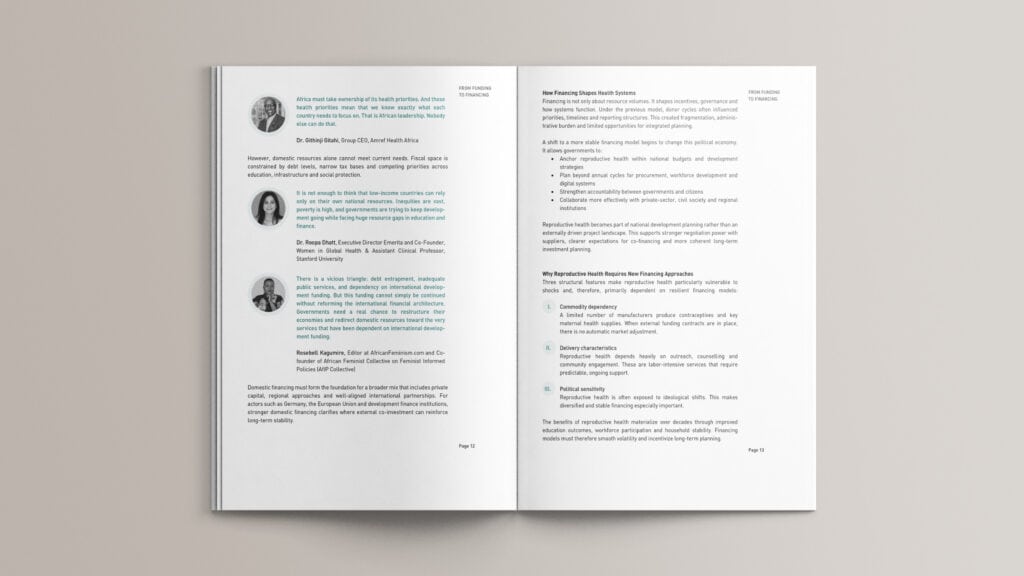
This interview publication reviews the effects of recent cuts in reproductive health, presents practical options for funding and service delivery, and offers guidance for policymakers and investors.
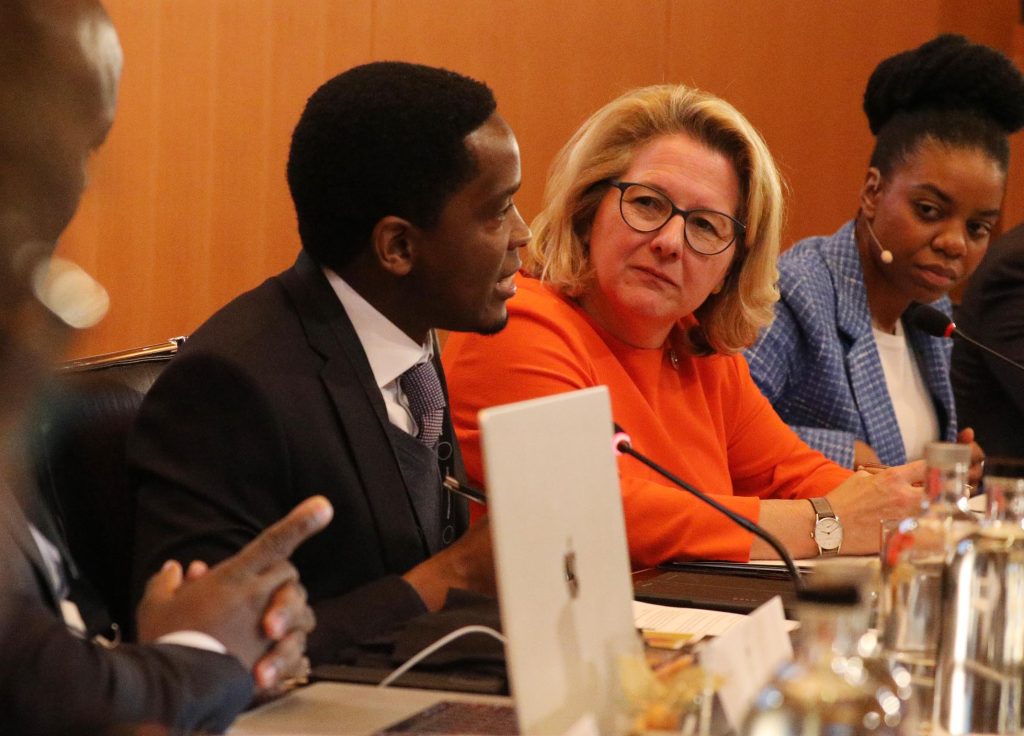
The fifth edition of The Africa Roundtable focussed on employability, skills and training and examine the possibilities of equal education and training for Africa's youth.

The sixth edition of the Africa Roundtable focuses on how the African continent can unlock its full potential as an agricultural powerhouse.

We discussed economic growth in Africa with high-level representatives from the public and private sectors and came up with three key ingredients needed for a sustainable upswing.

Fostering mobility is considered one of the most important solutions to the skills gap on the African continent. We discuss this at the follow-up to the fifth edition of The Africa Roundtable.

With a new space agency and an upcoming space port on the continent, the African space industry is capturing global attention. What does this mean for European-African cooperation?
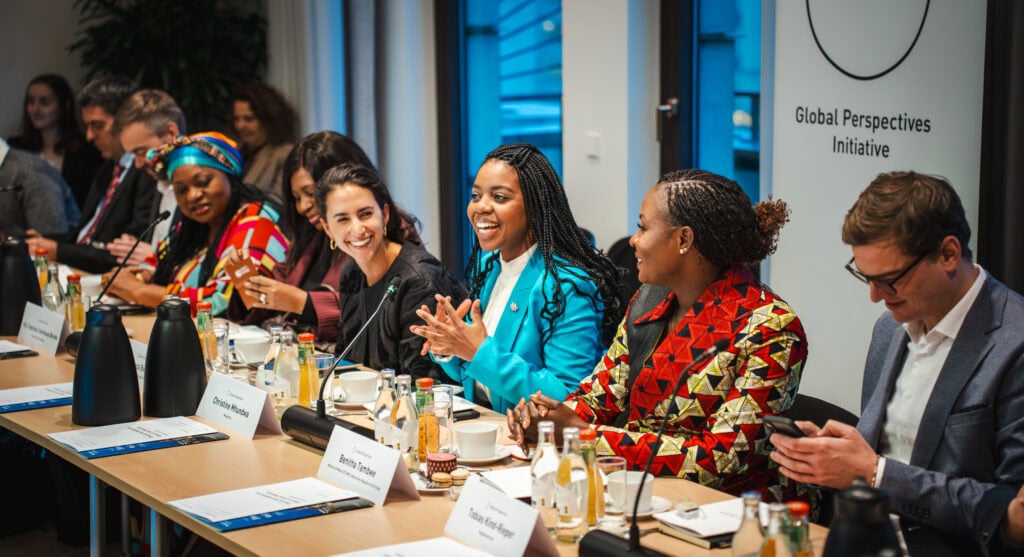
In the ninth edition of the Africa Roundtable, we discussed how Europe and Africa build partnerships that turn Africa's raw material wealth into local value creation.

Our roundtable during Berlin Global Dialogue discusses opportunities and drivers of economic growth on the African continent, while adressing the main roadblocks.
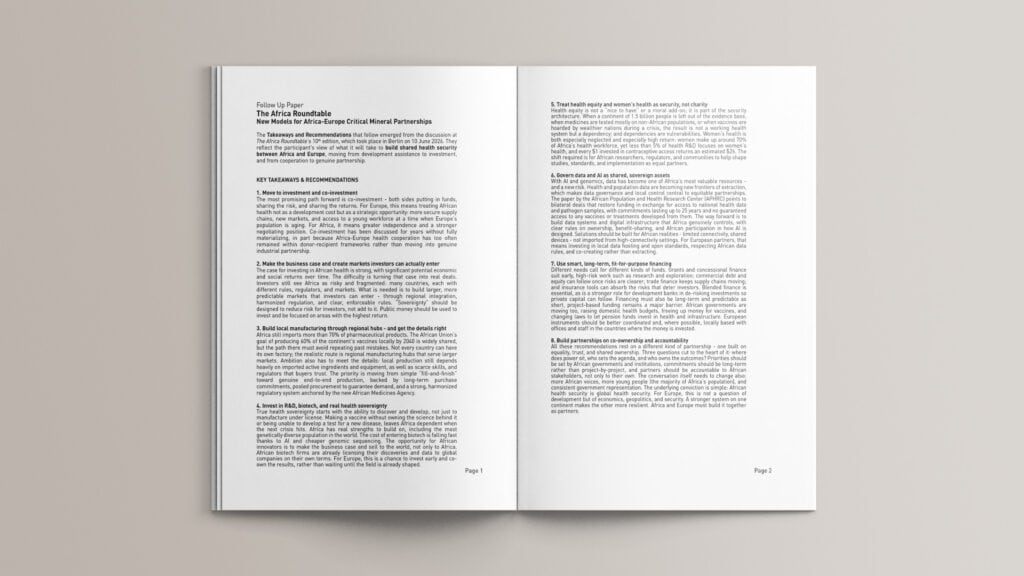
No continent can safeguard its health security alone. Shared health security is therefore a matter of mutual interest. The action recommendations of the tenth conference.
Program Archive
Africa is building its own capacity in health research, diagnostics, and vaccine production. This is creating new avenues for cooperation with Europe on health security.
What is at stake for Germany and Europe if they do not change course economically? Structural weaknesses, U.S. tariffs, and China’s growing economic power are increasing the tension.
No continent can safeguard its health security alone. Shared health security is therefore a matter of mutual interest. The action recommendations of the tenth conference.
We brought together policymakers and experts at the German Bundestag to discuss how Germany can strengthen Defense, Diplomacy, and Development as equal pillars of its foreign and security policy.
The impacts of climate change are being felt around the world. At the same time, there are reasons for hope. Together with Dr. Ani Dasgupta, we explored why the climate crisis calls for more optimism.
Health security in Europe and Africa is closely interconnected. We discussed stronger collaboration through investment in local production, health equity biotechnology, research, and innovation.
Africa is emerging as a major hub for innovation and artificial intelligence. With leading African voices from Big Tech, academia, and innovation, we highlighted AI innovation across the continent.
Climate policy is security policy. We discussed how Europe can work with countries in the Global South to implement concrete measures that benefit both sides.
At the launch of the Alliance for Integrated Security, we discussed the current geopolitical challenges and identified potential areas of cooperation between Germany and the Global South.